News
Sluice gates are important hydraulic structures used to manage water flow in canals, rivers, reservoirs, dams, irrigation channels, and other water control systems. For centuries, they have been used to regulate irrigation, prevent flooding, control water levels, and ensure a stable water supply for agricultural, municipal, industrial, and environmental purposes.
By opening, closing, raising, or lowering the gate, operators can control how much water passes through a channel. This makes sluice gates essential for water resource management, especially in areas where water flow needs to be carefully adjusted according to rainfall, irrigation demand, flood risk, or reservoir operation.
In modern hydraulic engineering, sluice gates may also be used together with waterproofing materials such as Bituminous GeoMembrane. This combination helps reduce seepage around the gate structure, improves durability, and supports more reliable water flow control.
A sluice gate is a movable barrier installed in the path of flowing water. Its main purpose is to control the rate, volume, and direction of water flow. Sluice gates are commonly used in canals, rivers, dams, reservoirs, irrigation systems, hydropower plants, flood control projects, and wastewater treatment facilities.
These gates are usually made from durable materials such as steel, wood, concrete, or other corrosion-resistant materials, depending on the project environment and water pressure requirements. They can be operated manually, electrically, or hydraulically. Small gates may be opened by hand, while larger gates often require electric motors, hydraulic systems, or automatic control equipment.
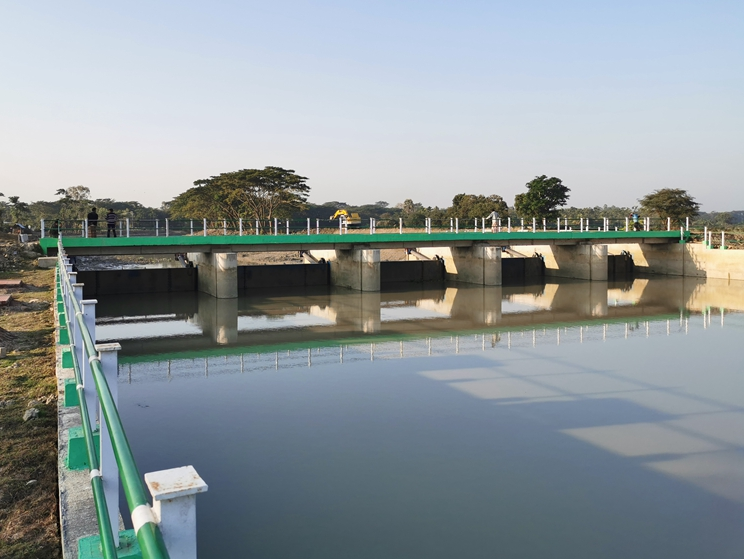
Sluice gates play several important roles in water management.
The primary function of a sluice gate is to regulate water flow. By adjusting the gate opening, operators can increase or decrease the amount of water passing through a canal or river channel. This helps maintain suitable water levels and ensures that water is distributed where it is needed.
During heavy rainfall or periods of excessive water flow, sluice gates can help divert, release, or contain water. This reduces the risk of flooding in downstream areas and helps protect farmland, roads, buildings, and other infrastructure.
In agricultural irrigation systems, sluice gates are used to deliver water to fields at the right time and in the right amount. They help farmers manage water more efficiently, support crop growth, and reduce unnecessary water waste.
Sluice gates are also used to regulate water supply from rivers, canals, or reservoirs. In urban and industrial areas, they help control the flow of water for domestic use, municipal systems, factories, and other water supply networks.
In hydropower plants, sluice gates control the release of water used to drive turbines. By adjusting the water flow, they help maintain stable electricity generation and safe operation of the hydropower system.
In wastewater treatment plants, sluice gates help regulate the movement of sewage and treated water between different treatment sections. This supports stable process control and efficient wastewater management.
Sluice gates can also be used to manage water levels in wetlands, estuaries, and ecological water systems. Proper water level control helps protect natural habitats and maintain healthy aquatic environments.
The operation of a sluice gate is based on a simple but effective principle: changing the size of the opening through which water flows. When the gate is raised or opened, more water can pass through. When the gate is lowered or closed, the flow is reduced or stopped.
The working process usually includes the following steps.
The sluice gate is first set at a certain height or angle. This position determines the size of the water passage and controls how much water can flow through the structure.
Operators adjust the gate position according to the required flow rate or water level. Raising the gate increases the water flow, while lowering the gate reduces the flow. This allows precise control of water movement in canals, rivers, reservoirs, and irrigation channels.
Once the required flow rate is achieved, the gate is secured in position. Many sluice gates are equipped with locking devices or mechanical systems to keep the gate stable under water pressure.
Regular maintenance is necessary to ensure that sluice gates operate properly. Maintenance work may include inspecting the gate structure, checking seals, lubricating moving parts, removing debris, and repairing any damage caused by corrosion, wear, or water pressure.
To improve the performance of sluice gates and surrounding hydraulic structures, Bituminous GeoMembrane can be used as a waterproofing material. It is made from bitumen, a petroleum-based material known for its waterproofing ability, flexibility, and durability.
When used together with sluice gates, Bituminous GeoMembrane helps prevent water seepage around the gate foundation, channel lining, embankment, or nearby structure. This is especially important in projects where water loss, soil erosion, or seepage may affect the stability of the hydraulic system.
Bituminous GeoMembrane acts as an impermeable barrier. It helps prevent water from seeping under or around the sluice gate, supporting the stability of the gate and the surrounding water control structure.
Bituminous GeoMembrane is resistant to weathering, water exposure, and environmental stress. Its long service life makes it suitable for hydraulic projects exposed to changing water levels and outdoor conditions.
The installation process of Bituminous GeoMembrane is relatively straightforward. It can be applied to different water control structures, making it a practical solution for improving waterproofing performance.
Bituminous GeoMembrane can be used with different types of sluice gates and hydraulic structures, whether the gate is made of steel, concrete, wood, or other materials.
When properly selected and installed, Bituminous GeoMembrane is suitable for hydraulic engineering applications and does not negatively affect water control performance. It can support long-term water management while helping reduce seepage and structural damage.
Sluice gates and Bituminous GeoMembrane are widely used in hydraulic engineering and water resource management projects.
Sluice gates are installed in flood-prone areas to control or divert excess water. Bituminous GeoMembrane can be used around related structures to reduce seepage and improve protection.
In agricultural canals and irrigation networks, sluice gates control the delivery of water to fields. Waterproofing support from Bituminous GeoMembrane can help reduce water loss in channels and related structures.
Sluice gates regulate water flow in hydropower systems. They help control the amount of water released to turbines and support stable power generation.
Sluice gates help manage water distribution from rivers, canals, and reservoirs. They ensure that water can be supplied steadily for domestic, municipal, and industrial use.
In reservoirs, sluice gates control water storage and discharge. They help maintain water levels, manage outflow, and support reservoir safety.
Sluice gates regulate wastewater flow during treatment processes. They help control water movement between different treatment areas and improve operational efficiency.
Sluice gates can be used to control water levels in wetlands, estuaries, and conservation areas. This helps protect natural habitats and maintain ecological balance.
Sluice gates are essential structures for controlling water flow in canals, rivers, reservoirs, irrigation systems, hydropower plants, and flood control projects. By adjusting the gate opening, operators can manage water levels, regulate flow rates, prevent flooding, support irrigation, and maintain a stable water supply.
When combined with Bituminous GeoMembrane, sluice gates can achieve better seepage control and improved structural durability. This makes the overall water management system more reliable, efficient, and suitable for long-term hydraulic engineering applications.