News
Check dams and farm ponds are two important water conservation structures used in agriculture, rural development, and land water management. Although both help improve water availability, they work in different ways and serve different purposes.
A check dam is mainly used to slow down flowing water, reduce runoff speed, and support groundwater recharge. A farm pond is designed to store water directly on farmland so it can be used for irrigation, livestock, and other farm needs.
In simple terms, a check dam improves water availability underground, while a farm pond provides accessible water on the surface. Understanding this difference helps farmers, landowners, contractors, and rural development planners choose the right solution for each site.
Water is one of the most critical resources in agriculture. In many rural areas, rainfall is seasonal, uneven, or difficult to store. During heavy rain, a large amount of water may flow away as surface runoff. During dry periods, farmers may struggle to find enough water for crops, livestock, and daily farm operations.
This is why structures such as check dams and farm ponds are widely used. They help capture, slow, store, or recharge water so that farms and communities can make better use of available rainfall.
However, check dams and farm ponds should not be seen as the same type of structure. Their design, function, benefits, and best-use conditions are different.
A check dam is a small barrier built across a seasonal stream, drainage line, small watercourse, or natural runoff channel. Its main purpose is not to store a large volume of water for direct use, but to slow down the speed of flowing water.
When rainwater flows through sloped land or drainage channels, it often moves quickly and carries away soil, nutrients, and surface water. A check dam reduces the flow velocity and allows water to spread, settle, and gradually percolate into the ground.
This process helps recharge groundwater and can improve water levels in nearby wells, borewells, and surrounding soil layers.
A check dam works by creating a controlled obstruction in the water flow path. When runoff reaches the structure, the water slows down and temporarily accumulates behind the dam. Some water may overflow during heavy rainfall, but because the flow speed is reduced, more water has time to soak into the ground.
This makes check dams especially useful in areas where rainwater quickly runs off the land and does not stay long enough to recharge groundwater.
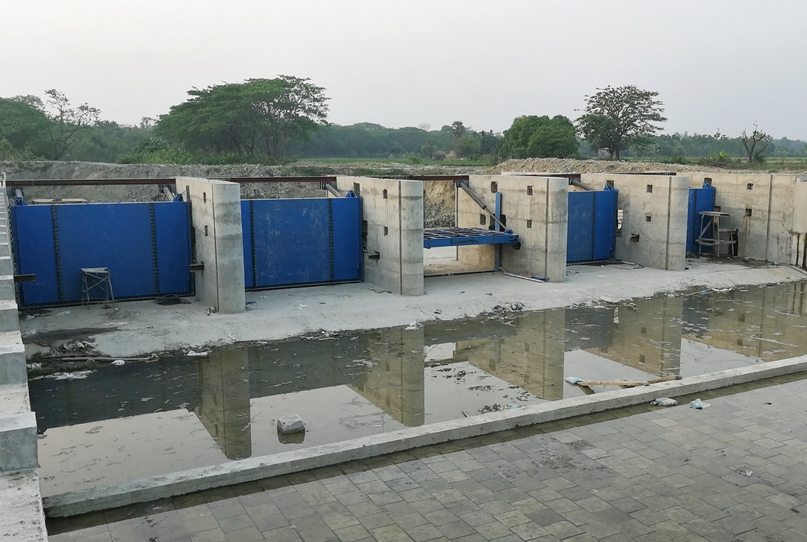
Check dams are suitable for:
· Sloped land
· Seasonal streams
· Drainage lines
· Rainwater runoff areas
· Villages facing groundwater depletion
· Areas with soil erosion problems
· Rural regions where wells and borewells depend on groundwater recharge
In many agricultural areas, groundwater is the main source of irrigation and drinking water. By improving groundwater recharge, check dams can indirectly increase water availability for surrounding farms and communities.
A farm pond is an excavated water storage structure built directly on farmland. Unlike a check dam, a farm pond is designed to store water for direct use.
Water collected in a farm pond may come from rainfall runoff, field drainage, canal supply, borewell discharge, or other available water sources. Once stored, the water can be pumped or released for irrigation, livestock watering, fish farming, spraying, or other agricultural needs.
For small and medium farms, a farm pond acts as a backup water source during dry periods.
A farm pond collects and stores water within a designated area on the farm. The stored water remains available for use when crops need irrigation or when rainfall is insufficient.
Farmers can connect the pond to pumps, pipes, sprinklers, drip irrigation systems, or open channels. This allows them to control when and where water is used.
Farm ponds are especially valuable where rainfall is irregular but still enough to collect during wet periods. They help farmers bridge the gap between rainfall events and crop water demand.
Farm ponds are suitable for:
· Flat or gently sloping agricultural land
· Farms needing direct irrigation water
· Areas with seasonal rainfall
· Market gardens, orchards, pastures, and small farms
· Farmers needing backup water during dry spells
· Locations where water can be collected and stored safely
A farm pond gives farmers more direct control over water use. This makes it useful for irrigation planning, crop scheduling, and reducing dependence on uncertain rainfall.
The main difference is not just the structure itself, but the purpose behind it.
A check dam creates a system-level impact. It slows runoff, reduces erosion, and improves groundwater recharge. Its benefit may be seen across a wider area, especially where nearby wells, borewells, and soil moisture improve over time.
A farm pond creates a farm-level impact. It stores water directly on the property and provides water that can be used immediately for irrigation or other farm activities.
In simple terms:
· Check Dam = Groundwater recharge and runoff control
· Farm Pond = Surface water storage and direct farm use
One supports the wider water system. The other supports daily farm operations.
| Factor | Check Dam | Farm Pond |
|---|---|---|
| Main Purpose | Slow runoff and recharge groundwater | Store water for direct use |
| Water Availability | Indirect, through groundwater improvement | Direct, from stored surface water |
| Best Location | Drainage lines, streams, sloped land | Farmland, flat or suitable storage areas |
| Main Benefit | Improves groundwater level and reduces erosion | Provides water for irrigation and farm use |
| Time to Benefit | Medium to long term | Immediate to short term |
| Suitable For | Community water conservation, watershed projects, groundwater recharge | Individual farms, irrigation planning, livestock watering |
| Water Use Method | Mainly recharge and flow control | Pumping, irrigation, storage, direct use |
| Impact Area | Wider area or village-level benefit | Farm-level benefit |
A check dam is a better choice when the main problem is fast-moving runoff or falling groundwater levels.
You should consider a check dam if:
· Rainwater flows away quickly from the land
· The area has seasonal streams or drainage channels
· Wells or borewells are drying up
· Soil erosion is a concern
· The goal is long-term groundwater improvement
· The project is planned for a village, watershed, or rural infrastructure area
A check dam may not provide large quantities of directly usable water on the surface, but it improves the underground water system and supports long-term water security.
A farm pond is a better choice when the main need is direct water storage for farming.
You should consider a farm pond if:
· You need stored water for irrigation
· Rainfall is seasonal but can be collected
· You want water available on the farm
· You need backup water during dry spells
· You plan to use pumps, sprinklers, or drip irrigation
· You want better control over crop watering schedules
A farm pond is practical for farmers who need immediate access to water for daily agricultural use.
Yes. In many cases, check dams and farm ponds work best when they are planned together.
A check dam can slow runoff and help recharge groundwater. A farm pond can store accessible water for irrigation and farm use. When used together, they create a more complete water management system.
A practical setup may work like this:
· Rainwater flows through the catchment area
· The check dam slows down runoff
· More water percolates into the ground
· Groundwater levels improve over time
· The farm pond stores water for direct use
· Farmers use stored pond water for irrigation during dry periods
This combined approach helps improve both underground water availability and surface water storage.
In many regions, only one type of structure is built without considering the full water system.
If only farm ponds are built, stored water may be used up quickly, especially during long dry periods. Without recharge support, the surrounding groundwater may still remain low.
If only check dams are built, groundwater may improve, but farmers may still lack direct access to stored surface water for irrigation.
This is why the most efficient approach is often to plan both structures according to land slope, rainfall pattern, soil type, water flow direction, and farming needs.
For agricultural land, rural infrastructure, and watershed development, the right solution depends on site conditions. Before constructing a check dam or farm pond, it is important to study water flow, catchment area, soil condition, land slope, storage demand, and irrigation requirements.
Companies such as Universal Cargo & Equipments work on check dam construction and farm pond development, helping create integrated water conservation solutions for agriculture and rural infrastructure projects.
Check dams and farm ponds are both valuable water conservation structures, but they are not the same.
A check dam slows flowing water, reduces runoff, and supports groundwater recharge. A farm pond stores water directly on the farm for irrigation and daily agricultural use.
They should not always be treated as alternatives. In many projects, they are complementary systems. One improves water availability underground, while the other provides water on the surface.
The best choice depends on land conditions, water flow, rainfall pattern, irrigation needs, and long-term water management goals. For many farms and rural development projects, the smartest approach is not choosing between a check dam and a farm pond, but understanding how both can work together to create a more reliable and sustainable water system.