Hydraulic Elevator Dam
L*H: 42*4 (m)
Applications: Irrigation, Flood Control, Tide-retaining
Location: Bhara, Bangladesh
Economic benefits: Bhora is the first pilot hydraulic elevator dam constructed by Beijing IWHR Corporation (BIC). The Bhora hydraulic elevator dam is one of the important projects of the local reginal irrigation system. The additional irrigation management measures and water management increase the irrigated area by about 3,000 hectares, improve the seasonally barren arable land in the region, and increase the annual grain yield by about 13,500 tons, thus increasing farmers' income. After the completion of the project, it greatly improve the local socio-economic conditions and play an important role in poverty alleviation in Chattogram District.

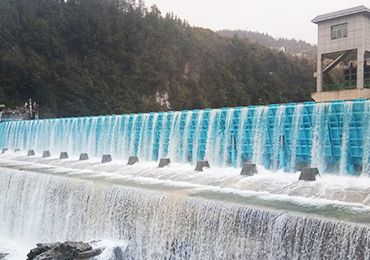
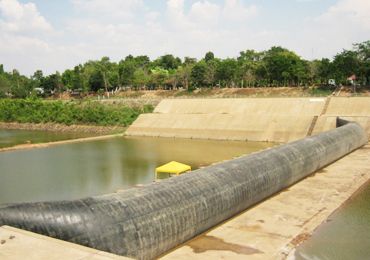
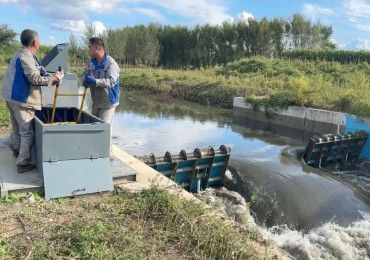
Implemented in July 2017, the Bhara Shanka project is an EPC hydraulic flap gate pilot located in Bhara, Bangladesh. The project uses a 42 m wide and 4 m high hydraulically driven carbon-steel gate to support irrigation water management, flood control and tidal regulation near an estuary.
Unlike a fixed weir, the movable gate can respond to changing upstream and downstream water levels. This allows one hydraulic structure to retain water for irrigation, control discharge during high-flow periods and restrict reverse tidal flow when downstream water levels rise.
| Project | Bhara Shanka Flap Gate Pilot Project |
|---|---|
| Location | Bhara, Bangladesh |
| Project Type | EPC hydraulic flap gate pilot project |
| Project Date | July 2017 |
| Gate Size | 42 m × 4 m |
| Gate Material | Carbon steel |
| Driving Mechanism | Hydraulic drive |
| Primary Functions | Irrigation, flood control and tide retention |
A water-control structure near an estuary must respond to river flow and downstream tidal changes. When the tide rises, reverse flow can move upstream and interfere with freshwater retention and agricultural water management. When the tide falls or upstream discharge increases, water must be released downstream under controlled conditions.
The Bhara Shanka hydraulic flap gate addresses these competing requirements through an adjustable operating sequence. The gate is closed during high tide to resist tidal backflow and opened during low tide to provide a downstream discharge path. Water can also be retained upstream when required by the regional irrigation system.
Raising the gate helps maintain an upstream water level that can support agricultural irrigation. Together with additional irrigation and water-management measures, the project expanded the managed irrigation area by approximately 3,000 hectares.
When upstream inflow increases and downstream conditions permit discharge, lowering the gate creates a wider flow passage. This operating flexibility helps the water-management system respond to seasonal rainfall and flood-control requirements without relying on a permanently fixed barrier.
Closing the gate during high-tide conditions limits reverse tidal flow from the estuary. Opening it again when the tide is lower allows accumulated upstream water to drain, combining tide retention and controlled discharge in the same structure.
Improved water availability helped bring seasonally underused arable land back into production. The project increased annual grain output by approximately 13,500 tons and supported higher agricultural income in the surrounding area.
The Bhara Shanka project was developed as an EPC hydraulic gate project rather than as the supply of an isolated gate panel. The 42 m × 4 m structure required the gate geometry, hydraulic driving system and civil interfaces to be coordinated with the estuary water levels and the operating requirements of the irrigation system.
Engineering a similar hydraulic flap gate project normally requires coordinated review of:
◆ Upstream and downstream design water levels
◆ Normal flow, flood discharge and tidal water-level ranges
◆ Required gate width, retaining height and number of spans
◆ Gate-panel loads and hydraulic actuation requirements
◆ Foundation, embedded parts, seals and civil interfaces
◆ Sediment, floating debris and local corrosion conditions
◆ Local operating controls, power supply and emergency operation
◆ Installation, commissioning and operator training requirements
These parameters must be reviewed together because a gate selected only by width and height may not provide the required discharge capacity, water-retaining performance or operating reliability under actual site conditions.
The completed project improved the management of irrigation water across approximately 3,000 hectares of agricultural land. Better seasonal water availability helped increase annual grain production by about 13,500 tons, improve the use of seasonally barren farmland and raise local farming income.
The project therefore demonstrates how a hydraulic flap gate can provide benefits beyond basic water retention. By combining irrigation storage, flood discharge and tidal regulation, the structure supports both regional water management and long-term agricultural development in Chattogram District.
The Bhara Shanka pilot provides a reference for irrigation systems, tidal rivers and low-head water-control projects that require more operating flexibility than a fixed weir can provide. However, the dimensions and operating arrangement used in Bangladesh should not be copied directly to another site without hydraulic and structural assessment.
Each new project should be designed according to its hydrology, design flood, tidal range, required storage level, sediment conditions, civil layout and operating strategy. BIC can provide technical services covering site assessment, system design and installation guidance for project-specific hydraulic structures.
The project uses a hydraulically driven carbon-steel flap gate measuring 42 m wide and 4 m high. It was implemented as an EPC pilot project for irrigation, flood control and tide retention.
The gate is closed when the downstream tide is high to restrict reverse tidal flow. It can be opened when the tide is lower to release upstream water under more favorable discharge conditions.
Not necessarily. Gate width, retaining height, actuation, structural loads and control requirements must be selected according to the hydrological, geological and operating conditions of each site.