News
A sluice gate is a hydraulic control device designed to regulate water flow in open channels, canals, rivers, reservoirs, and engineered systems such as drainage and sewer networks. Operating as a vertically sliding barrier, it can be raised or lowered to allow, restrict, or completely stop water flow, enabling precise control of water movement. As a critical element of water management infrastructure, sluice gates are widely used in flood control systems, water treatment facilities, irrigation networks, and wastewater treatment plants.
By providing effective water level regulation, flow control, and system isolation, sluice gates play a vital role in both urban and rural hydraulic engineering projects. Although the basic principle of sliding water gates has existed for centuries, modern sluice gates are engineered to deliver enhanced reliability, operational safety, and long-term durability under demanding environmental conditions.
A sluice gate operates through controlled vertical movement to regulate water flow. It typically consists of a solid gate leaf—commonly fabricated from metal or reinforced composite materials—that moves within guide grooves or tracks fixed to a supporting frame. The gate leaf is raised or lowered by manual, mechanical, or automated drive systems to open or block the flow passage.
When the gate is lifted, water passes beneath or through the opening. Lowering the gate progressively restricts the flow until a full seal is formed. The opening height directly controls both the discharge volume and the flow velocity, allowing precise regulation of water movement.
· Manual handwheels or threaded spindles – Suitable for small-scale installations or gates with low operating frequency
· Electric actuators – Enable remote control, automation, and integration with monitoring systems
· Hydraulic cylinders – Widely used in large or heavy-duty gates requiring high force and accurate positioning
· Pneumatic systems – Applied where hydraulic solutions are impractical or restricted
Thanks to its straightforward sliding design, a sluice gate offers reliable performance and long service life, even under high water pressure, continuous operation, or corrosive environmental conditions.
Sluice gates are widely used across water management and hydraulic engineering systems to regulate, divert, or isolate water flow. Typical applications include:
Wastewater treatment plants – Controlling flow between process tanks and channels, or isolating sections for inspection and maintenance
Combined sewer overflow (CSO) systems – Managing excess flow during heavy rainfall to reduce uncontrolled environmental discharge
Irrigation networks – Regulating water distribution across agricultural fields, canals, and secondary channels
Flood control infrastructure – Managing river levels, stormwater retention, and controlled reservoir releases
Reservoirs and dams – Regulating discharge to downstream waterways and hydropower systems
Tidal barriers and coastal defences – Preventing seawater intrusion and protecting low-lying or flood-prone areas
Industrial process systems – Controlling large volumes of process water or effluent within industrial treatment and recycling facilities
Owing to their adaptable design and reliable sealing performance, sluice gates are suitable for both gravity-flow and pressurised hydraulic systems.
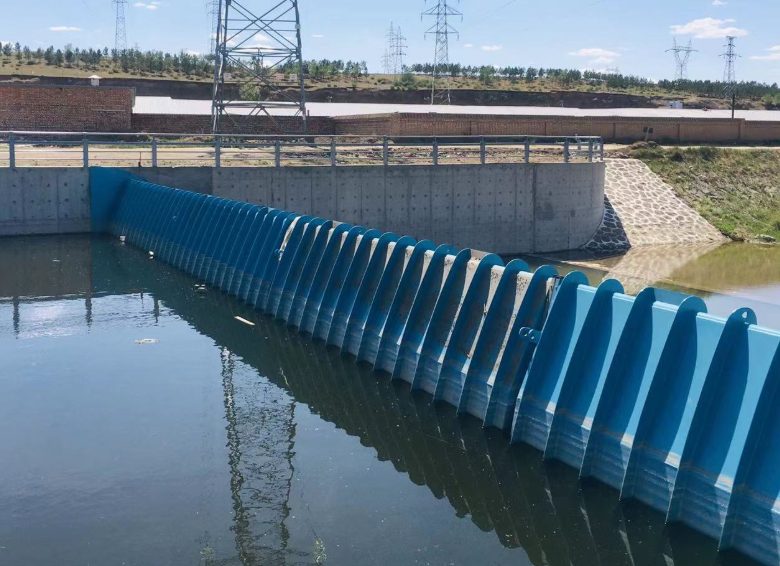
There are several types of sluice gates, each designed for specific flow conditions, installation arrangements, and operational requirements.
This is the most common type of sluice gate. It operates by lifting a vertical panel to allow water to flow beneath the gate. Vertical slide gates are typically used in rectangular channels or manholes and may be installed in either wall-mounted or channel-mounted configurations.
Radial gates feature a curved gate surface and operate by pivoting upward from the base. They are commonly used in dam spillways and large flood-control structures, where high flow capacity and reduced structural loading are required.
Although structurally different from sliding gates, flap gates perform a similar function by opening in one direction under water pressure. They are often applied in outfall protection systems.
Slide valve gates are flat-plate gates used in pipelines or pressurised systems where flow regulation or complete shut-off is required.
Tilting gates are used less frequently and operate by rotating about a horizontal axis. They are typically applied in treatment processes or hydraulic conditions that require controlled and adjustable flow.
Each sluice gate design offers specific advantages with respect to flow control capability, maintenance access, and installation requirements.
Sluice gates must withstand variable loading conditions, chemical exposure, abrasion, and in some cases prolonged immersion. Material selection depends on the nature of the fluid being controlled, the required service life, and the intended maintenance regime.
· Stainless steel – Provides high corrosion resistance and good structural strength; widely used in municipal applications.
· Cast iron – Strong and durable, commonly found in older installations and large-scale systems.
· Plastic composites (e.g. HDPE, PVC) – Lightweight and corrosion-resistant; suitable for smaller systems or chemically aggressive environments.
· Aluminium – Lightweight and corrosion-resistant, but generally not preferred for high-pressure applications.
In addition to the gate leaf, the frame, sealing components, and operating mechanism must be compatible with the surrounding structure and hydraulic conditions. For example, gates used in sewage systems must resist hydrogen sulphide exposure, abrasion from suspended solids, and biological fouling.
The reliable performance of a sluice gate depends on appropriate design and correct specification. Key factors to consider include:
· Flow rate and velocity – Determines the required opening size and the hydraulic load acting on the gate
· Hydrostatic pressure – Particularly critical for gates installed at greater depths or controlling high water levels
· Sealing and leakage control – The ability of the gate to achieve a watertight seal when fully closed
· Mounting type – Whether the gate is wall-mounted, embedded in concrete, or channel-mounted
· Access for maintenance – The gate must be accessible for inspection, cleaning, and repair without significant operational disruption
· Frequency of operation – Influences the suitability of manual versus automated actuation
· Environmental conditions – Including exposure to saltwater, temperature variation, or debris loading
In flood control applications, redundancy and fail-safe operation are critical. In sewerage systems, corrosion resistance and ease of cleaning are typically key priorities.
Sluice gates are generally low-maintenance components; however, regular inspection and servicing are essential to ensure reliable operation. Operating procedures vary depending on gate size, installation location, and the type of control system used.
Routine maintenance activities may include:
· Removing debris from the gate leaf, guides, and surrounding structure
· Lubricating moving components, including bearings and drive mechanisms
· Checking for corrosion or material deterioration
· Testing actuators, whether manual or automated
· Inspecting seals for leakage, wear, or damage
· Flushing accumulated sediment from associated channels or chambers
For automated installations, associated electrical, control, or telemetry systems also require regular inspection and maintenance. In critical applications, backup power systems may be necessary to ensure continued operation during power outages.
· Simple and reliable flow control
· Suitable for a wide range of water and wastewater systems
· Can be operated manually or automatically
· Long service life when properly maintained
· Low energy consumption, particularly in manual configurations
· Debris and sediment may obstruct operation if routine cleaning is not performed
· Achieving full closure can be difficult under high-flow conditions
· Manual gates require physical access and operator effort
· Seals may wear over time, resulting in minor leakage
· Retrofitting may require civil or structural modifications
Despite these limitations, sluice gates remain one of the most commonly used and dependable flow-control devices in water infrastructure systems worldwide.
Sluice gates are often installed as part of a wider hydraulic or treatment system and are commonly integrated with the following components:
· Pumping stations – To isolate pumps during maintenance or redirect flows as required
Storm tanks or CSO chambers – To manage excess flows during periods of heavy rainfall
· Treatment plant process units – Including sedimentation tanks, flow channels, and balancing tanks
· Flood defence systems and reservoirs – For controlled release or temporary containment
· Monitoring and control systems – Automated sluice gates may be linked to flow sensors and SCADA systems
Where automation is applied, operation can be programmed to respond to water levels, rainfall data, or predefined time schedules, improving system responsiveness and overall operational efficiency.
A sluice gate is a fundamental and versatile device for controlling water and wastewater flows. From large-scale flood defence schemes to small treatment plants, sluice gates provide a robust and cost-effective solution for flow regulation, isolation, and system control. When properly designed, constructed, and maintained, they play a key role in ensuring the reliability and efficiency of modern water infrastructure.
As climate variability, urban development, and evolving environmental standards continue to influence water management, the importance of reliable flow-control structures such as sluice gates remains as significant as ever.