Recommend Products
Building a spillway requires careful planning and execution to ensure effective water flow control and management. Our step-by-step guide provides you with the essential information and techniques needed to construct a reliable spillway. From site selection and design to construction and maintenance, learn how to build a spillway that meets your specific water management needs. Trust our expertise to guide you through the process successfully. BIC mainly works in water conservancy, small-scale hydropower and water treatment fields, capable of undertaking turn-key projects including engineering investigation and design, construction, supervision, consulting and evaluation, monitoring and inspection, installation and commissioning.
Building a spillway is not simply a matter of creating a water outlet. For dam, reservoir, irrigation and flood control projects, a spillway must be designed to safely discharge excess water, protect the dam body, prevent downstream erosion and maintain reliable water level control during normal and extreme flow conditions.
This guide explains the key engineering considerations behind how to build a spillway for water conservancy projects. For project owners, EPC contractors, design institutes and water management authorities, BIC provides spillway design support, customized hydraulic structures, spillway gates, installation guidance, commissioning and long-term technical service.
BIC mainly works in water conservancy, small-scale hydropower and water treatment fields, with capabilities covering engineering investigation, design, construction support, supervision, consulting, monitoring, inspection, installation and commissioning.
A spillway is a hydraulic structure used to release excess water from a dam, reservoir, weir or water storage project. Its main purpose is to prevent overtopping, reduce flood risk and protect the safety of the entire hydraulic structure.
In irrigation reservoirs, small hydropower dams, river regulation projects and flood control systems, a properly designed spillway helps achieve:
· Safe flood discharge during high inflow periods
· Stable reservoir water level control
· Protection of the dam body and downstream channel
· Reduced erosion and scouring at the outlet area
· Reliable operation of irrigation, water storage or hydropower systems
· Better coordination between water retention and flood release
For B2B project buyers, the key question is not only how to build a spillway, but how to select the right spillway type, gate system and hydraulic structure according to real project conditions.
Before building a spillway, engineers need to evaluate the project site, dam type, reservoir capacity, river width, foundation condition, topography, downstream channel and operation requirements.
Important information includes:
· Project location and application
· Catchment area and hydrological conditions
· Normal water level and flood water level
· Required flood discharge capacity
· Dam type and reservoir function
· Foundation and geological condition
· Downstream erosion risk
· Construction access and installation conditions
This stage determines whether the project needs a fixed overflow spillway, gated spillway, hydraulic weir, movable weir, rubber dam or other customized water control structure.
Spillway design must be based on reliable hydraulic calculation. The design team needs to confirm peak flood flow, discharge capacity, flow velocity, water level variation and downstream tailwater condition.
For dam and reservoir projects, this step directly affects spillway width, crest elevation, gate size, chute structure, stilling basin and energy dissipation design.
Different projects require different spillway structures. Common options include:
| Spillway / Structure Type | Suitable Application |
|---|---|
| Open channel spillway | Reservoir flood discharge and gravity flow release |
| Gated spillway | Projects requiring controlled water release |
| Chute spillway | Dams with clear downstream discharge channel |
| Stepped spillway | Projects requiring improved energy dissipation |
| Side channel spillway | Sites with limited space near dam abutment |
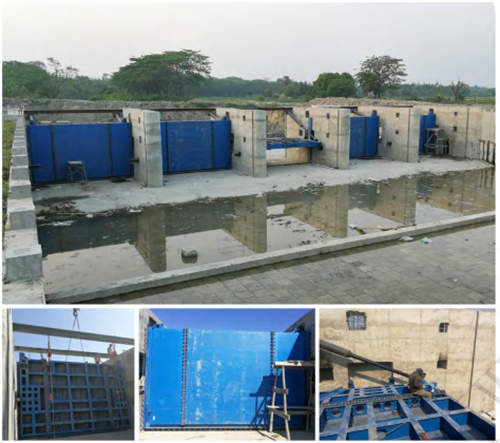
| Hydraulic weir | Low-head water control, irrigation and river regulation |
| Movable weir | Adjustable water retention and flood discharge |
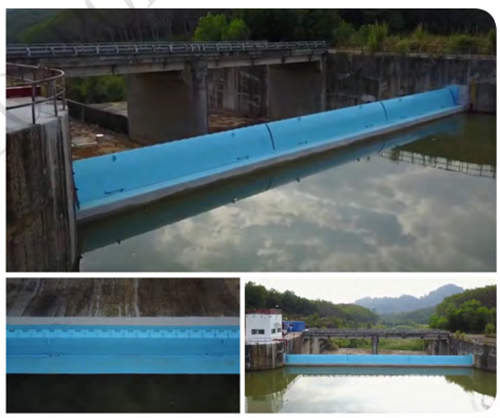
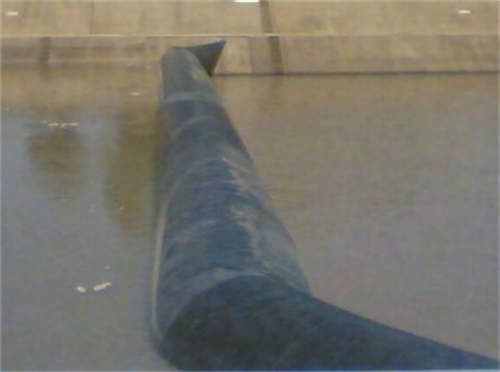
| Rubber dam | Low-head water storage, irrigation and flexible river control |
BIC can help project owners compare different solutions and select a suitable structure based on safety, cost, construction difficulty, operation method and maintenance requirements.
A spillway must be coordinated with the dam body, foundation, sidewalls, outlet channel and downstream protection works. The civil structure should resist water pressure, uplift force, impact, abrasion and long-term environmental exposure.
Key design considerations include:
· Spillway crest elevation
· Spillway width and discharge section
· Gate opening size
· Foundation treatment
· Sidewall and guide wall arrangement
· Downstream apron or stilling basin
· Anti-scour protection
· Concrete structure and reinforcement design
· Interface with hydraulic gate or movable structure
High-speed water flow from a spillway can damage the downstream riverbed if energy is not properly dissipated. For this reason, spillway construction often includes energy dissipation structures such as stilling basins, baffle blocks, flip buckets, stepped channels or protective aprons.
A good spillway design should reduce flow velocity, control hydraulic jump position and protect the downstream channel from scouring.
For projects that require adjustable water release, spillway gates are essential. Gate type and control method should be selected according to discharge capacity, water level control accuracy, operation frequency and site conditions.
BIC can support customized spillway gate and hydraulic control solutions, including:
· Flood discharge gates
· Hydraulic weir systems
· Movable weirs
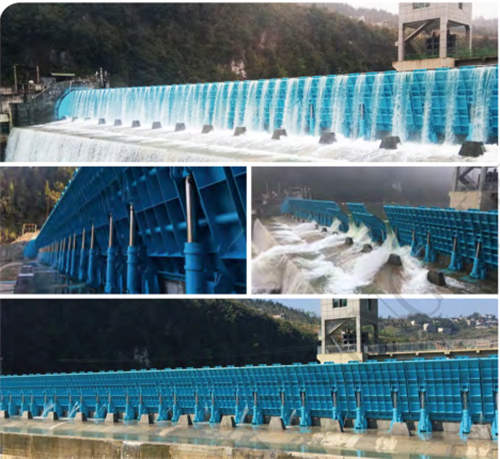
· Spillway crest gates
· Radial or flap-type gate structures
· Manual, hydraulic, PLC or remote control systems
· Water level alarm and automatic lowering functions
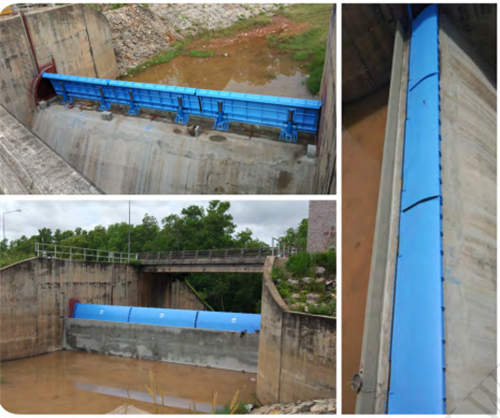
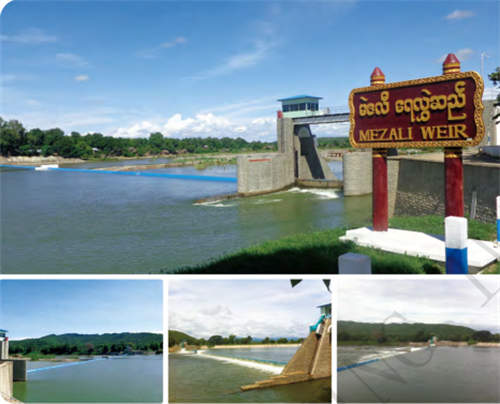
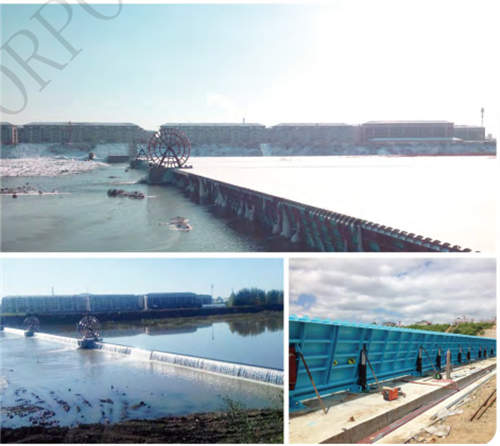
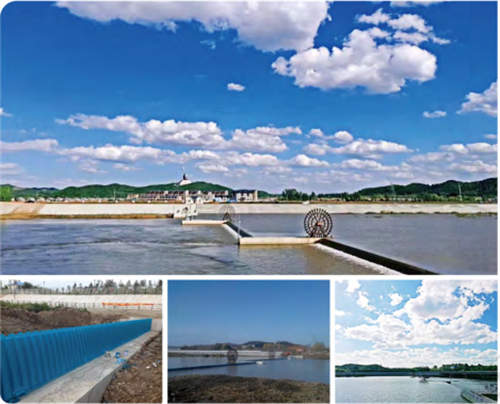
Related solutions include Hydraulic Elevator Dam, Inflatable Rubber Dam and Simplified Elevated Dam.
To prepare a technical proposal, the following parameters are usually required:
| Parameter | Why It Matters |
|---|---|
| Project application | Determines whether the spillway is for irrigation, reservoir, flood control, hydropower or river regulation |
| Design flood discharge | Affects spillway size, gate capacity and outlet structure |
| Normal water level | Determines water retention and operation range |
| Maximum flood water level | Determines safety margin and discharge demand |
| River or dam width | Affects span arrangement and civil structure layout |
| Foundation condition | Influences structure type, anchoring and seepage control |
| Downstream tailwater level | Affects hydraulic jump and energy dissipation design |
| Operation mode | Determines manual, hydraulic, diesel, PLC or remote control system |
| Maintenance requirement | Affects gate type, material, coating and spare parts planning |
BIC provides more than a single product. For dam spillway construction and hydraulic structure projects, we can support customers through the full project process.
BIC helps customers evaluate project requirements, compare water control solutions and confirm the suitable spillway or hydraulic structure type.
Based on project data, BIC can support layout planning, gate configuration, hydraulic system selection, control mode design and installation interface coordination.
BIC supplies customized hydraulic structures, spillway gates, movable weirs and related water control equipment according to project requirements.
For domestic and overseas projects, BIC can provide installation guidance to support civil contractors and EPC teams during project execution.
After installation, BIC can support system commissioning, operation testing and training for operation and maintenance teams.
BIC spillway design and construction support can be used in:
· Irrigation reservoir projects
· Flood control dams
· Small hydropower stations
· River regulation projects
· Canal intake and diversion systems
· Low-head water storage projects
· Dam rehabilitation and spillway upgrading
· Movable weir and hydraulic gate projects
· Rural water conservancy projects
· Landscape and ecological water storage systems
BIC has long-term experience in water conservancy, hydraulic structures and water control engineering. Our solutions are designed for practical project use, not only for standard equipment supply.
Key advantages include:
· Engineering support for dam, reservoir, weir and spillway projects
· Customized hydraulic structures based on site conditions
· Support for design, manufacturing, installation and commissioning
· Experience in irrigation, flood discharge, water storage and small hydropower applications
· Multiple water control options, including hydraulic weir, rubber dam and simplified elevated dam
· Quality control for key components, welding, hydraulic systems and surface treatment
· Technical service for EPC contractors, project owners and water authorities
A dam spillway should be built through site survey, hydrological analysis, spillway type selection, structural design, energy dissipation design, gate system configuration, construction, installation and commissioning. It should be designed by qualified hydraulic engineers according to project safety requirements.
For irrigation reservoirs, the suitable solution may be an open channel spillway, gated spillway, hydraulic weir, movable weir or rubber dam, depending on water level control, flood discharge demand and site conditions.
Yes. BIC can provide customized spillway gates and hydraulic water control structures according to project width, water retaining height, discharge capacity, operation mode and installation interface.
A spillway is mainly used to release excess water from a dam or reservoir, while a weir is often used to raise or regulate water level in rivers, canals and low-head water control projects. Some water control projects may combine both functions.
Yes. Existing spillways can be upgraded by improving gate systems, increasing discharge capacity, adding hydraulic control structures, strengthening downstream protection or replacing outdated components.
Yes. BIC can provide technical communication, customized equipment supply, installation guidance, commissioning support and project documentation for overseas water conservancy projects.
Main cost factors include spillway type, design discharge, structure size, foundation condition, gate system, control method, material selection, civil works and installation requirements.
You can send your project data, drawings, water level requirements and discharge requirements to BIC. Our team will evaluate the project and recommend a suitable spillway or hydraulic structure solution.
If you need to build a spillway, upgrade an existing dam spillway or select a water control structure for a reservoir, irrigation or flood control project, BIC can provide project-based technical support and customized solutions.
Contact BIC to discuss your spillway design and construction requirements.
Related Information
Air Filling Rubber Dam ManufacturerCustom Melting Deicing DeviceRemote Control Hydraulic Dam ManufacturerSewage Containerized Treatment Plant SupplierWater Management Inflatable Rubber DamEnvironmental Protection Inflatable Rubber DamEnvironmental Protection Simplified Elevated DamIrrigation Inflatable Rubber DamWater Control Inflatable Rubber DamFlows Regulation Inflatable Rubber DamFlows Regulation Simplified Elevated DamFlood Water Diversions Inflatable Rubber DamFlood Mitigation Inflatable Rubber DamLandscape Inflatable Rubber DamPower Generation Inflatable Rubber DampengyunpengyuntwopengyunthreeDams And Spillways ManufacturerDams And Spillways Design CompanyDams And Spillways Construction SupplierSpillway Crest GatesDrum Gate SpillwaySmall Dam SpillwayPond Dam SpillwayMovable Weir CostMovable Weir MaintenanceMovable Weir InstallationTop Hydraulic Dam ManufacturersHydraulic Dam SuppliersHydraulic Dam CompaniesHydraulic Dam Maintenance ServicesInflatable Rubber Dam ManufacturersInflatable Rubber Dam SuppliersInflatable Rubber Dam DistributorsInflatable Rubber Dam Installation CompaniesBuy Hydraulic Dam PartsHydraulic Dam Construction CostHydraulic Dam Installation ServicesBest Hydraulic Dam ContractorsHydraulic Dam Engineering FirmsMovable Weir ManufacturersMovable Weir SuppliersMovable Weir DistributorsMovable Weir Quotes