News
A spillway is one of the most essential safety components in dam construction, yet it is often overlooked by the general public who mainly associate dams with water storage and hydroelectric power generation. In reality, a dam without a properly designed spillway would be highly dangerous, especially during heavy rainfall or flood events. The spillway acts as a controlled release system that ensures excess water is safely discharged from a reservoir without damaging the dam structure or threatening downstream communities. Understanding how a spillway works is crucial for civil engineers, hydrologists, and anyone involved in water resource management.
A spillway is fundamentally a hydraulic structure designed to pass surplus water from a reservoir downstream in a controlled manner. When a dam is built across a river, it blocks natural water flow and creates a reservoir. While this stored water is useful for irrigation, drinking water supply, flood control, and hydropower generation, it also introduces a risk: during heavy rainfall or snowmelt, inflow into the reservoir can exceed its storage capacity. Without a spillway, water levels would rise uncontrollably and eventually overtop the dam. Overtopping is extremely dangerous, especially for earthfill or rockfill dams, because flowing water can rapidly erode the dam body and lead to structural failure. A spillway prevents this scenario by providing a designated path for excess water to escape safely.
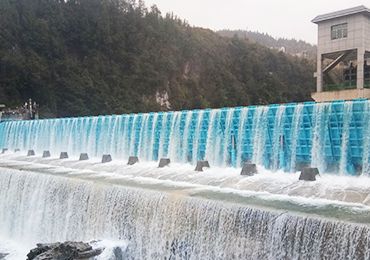
The working principle of a spillway is based on simple hydraulic balance. When the water level in the reservoir rises above a pre-designed elevation, it reaches the spillway crest. The crest acts like a controlled overflow threshold. Once water flows over it, gravity drives it through a carefully engineered channel or structure that carries it downstream. The flow is not random; it is guided, controlled, and designed to handle specific flood conditions known as design floods. Engineers calculate these conditions based on historical rainfall, watershed size, and extreme weather probabilities.
A typical spillway system consists of several key components that work together to ensure safe operation. The inlet structure is where water first enters the spillway, often shaped as a weir or crest. This section controls how much water begins to spill. The conveyance channel then transports water away from the dam. This may be a chute, tunnel, shaft, or side channel depending on the dam design and terrain. Finally, an energy dissipation system reduces the velocity of water before it re-enters the river downstream. This is extremely important because high-speed water can erode soil, damage riverbanks, and undermine the dam foundation if not properly controlled.
One of the most important aspects of spillway function is energy management. When water falls from a high reservoir level, it gains significant kinetic energy. If this energy is not controlled, it can cause severe erosion at the base of the dam. To solve this, engineers use structures such as stilling basins, flip buckets, or plunge pools. These devices dissipate energy by creating turbulence, spreading flow, or redirecting water jets away from vulnerable areas. Without these mechanisms, even a well-built dam could gradually be destroyed by its own spillway discharge.
There are several types of spillways, and each works slightly differently depending on the dam type and geographic conditions. The ogee spillway is commonly used in concrete gravity dams and features a curved crest designed to match the natural shape of flowing water. This allows smooth and efficient discharge. Chute spillways are often used in earthfill dams, where water flows down a steep, lined open channel away from the dam structure. Shaft spillways, also known as morning glory spillways, use a vertical drop shaft that funnels water downward into a tunnel. Side channel spillways are used in narrow valleys where water is guided along the side of the dam before being redirected downstream. Each type ensures that excess water is safely controlled under different environmental and engineering constraints.
To understand how a spillway works in real conditions, imagine a reservoir during a storm event. As rainfall increases, river inflow begins to rise rapidly. The reservoir level slowly climbs toward its maximum safe operating level. Once it reaches the spillway crest elevation, water begins to flow automatically over the spillway. This process is typically passive and does not require human intervention, which is a critical safety feature. As inflow continues, more water flows over the spillway, ensuring that the reservoir level does not exceed safe limits. At the same time, the dam continues to function normally for water storage and power generation.
An important design principle of spillways is that they must operate automatically and reliably under extreme conditions. Engineers design them so that even if operators are not present, the system will still function correctly during floods. This is essential because flood events can happen suddenly and may last for several hours or days. A properly designed spillway ensures that the dam can safely pass even rare and extreme flood events without structural damage.
Another key function of spillways is to regulate downstream flow. While the main goal is to protect the dam, engineers also consider the impact on downstream rivers. If too much water is released too quickly, it can cause flooding downstream. Therefore, spillways are designed to balance safety with environmental and social considerations. In many modern dams, gated spillways allow operators to control the rate of discharge depending on real-time conditions.
Spillways also play an important role in long-term dam safety. Over time, climate change and land-use changes can alter rainfall patterns and increase flood intensity. A spillway that was adequate decades ago may no longer meet current safety standards. For this reason, many older dams undergo spillway upgrades to increase capacity and improve energy dissipation performance. Failure of a spillway or insufficient capacity is one of the most common contributing factors in dam failure incidents worldwide.
In modern civil engineering practice, spillway design involves advanced hydraulic modeling and computer simulations. Engineers analyze how water behaves under different flow conditions, including extreme flood scenarios. They evaluate potential risks such as cavitation, erosion, and structural vibration. These analyses ensure that the spillway can perform reliably even under the most demanding conditions.
In conclusion, a spillway is a vital safety feature in dam construction that works by providing a controlled outlet for excess reservoir water. It activates automatically when water levels rise, guiding flow through engineered channels while dissipating energy to prevent structural damage. Without spillways, dams would be highly vulnerable to overtopping and catastrophic failure. By combining hydraulic design, structural engineering, and environmental planning, spillways ensure that dams operate safely and efficiently, protecting both infrastructure and human life.