News
Water management has always been at the heart of human civilization. From ancient irrigation canals to modern hydraulic engineering, controlling water flow is essential for agriculture, urban safety, and ecological balance. Among today's most practical innovations is the low head movable dam, a flexible solution widely used in river regulation, irrigation systems, and flood control projects.
A low head movable dam is a type of hydraulic structure designed to regulate water levels in rivers or canals where the height difference (or "head") is relatively small—typically less than 15 meters. Unlike traditional fixed dams, these systems are adjustable or retractable, allowing operators to control water flow dynamically.
Common types of low head movable dams include:
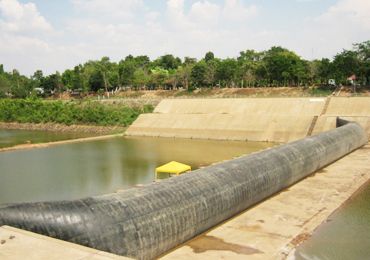
· Rubber dams (inflatable dams)
· Steel gate dams (radial gates, vertical lift gates)
· Hydraulic tilting weirs
These systems are engineered to raise or lower water levels as needed, making them ideal for regions that require seasonal or real-time water management.
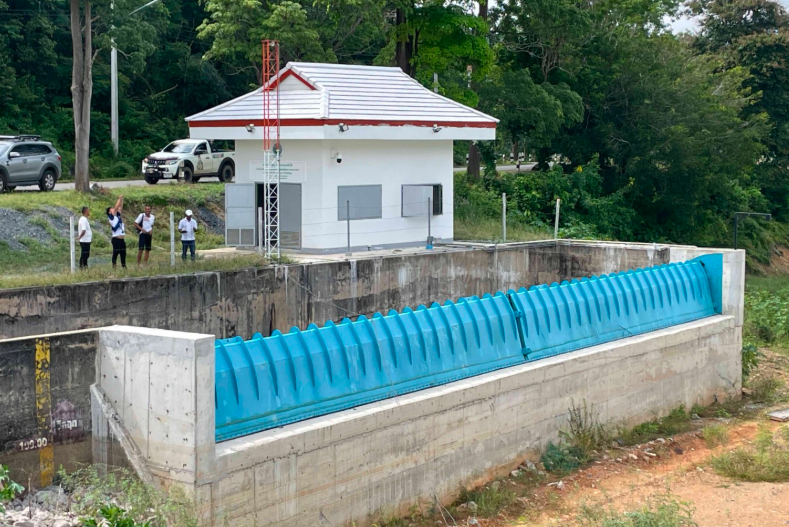
The working principle of a low head movable dam is straightforward yet highly effective:
When the dam is closed or inflated, it holds back water, increasing the upstream water level. This stored water can then be diverted for irrigation, municipal supply, or industrial use.
During heavy rainfall or flood conditions, the dam can be lowered or deflated, allowing water to flow freely downstream. This helps reduce upstream flooding risks.
Operators can partially open the dam to maintain a stable flow rate, ensuring consistent water availability while protecting downstream ecosystems.
This adaptability is what makes the low head movable dam solution highly valuable in modern river engineering.
One of the most important uses of low head movable dams is in agriculture. Water availability is often uneven, especially in regions with seasonal rainfall. These dams help bridge that gap.
By raising upstream water levels, the dam ensures that irrigation canals receive a steady and controlled water supply, even during dry periods.
Farmers can rely on consistent flow rates, reducing water waste and improving crop yields.
During planting seasons, more water can be retained. During harvest or rainy periods, excess water can be released.
This makes the low head dam irrigation solution particularly suitable for:
· Rice paddies
· Dryland farming areas
· Multi-crop agricultural zones
Flooding is a growing concern for many cities due to climate change and extreme weather events. Low head movable dams provide an effective defense mechanism.
Unlike fixed dams, movable systems can be quickly adjusted or fully opened, allowing floodwaters to pass through without obstruction.
By lowering the dam during peak flow, the system prevents water from accumulating excessively upstream.
Modern dams can be equipped with sensors and automated controls, enabling real-time response based on rainfall and river data.
As part of a river regulation low head dam strategy, these systems help cities:
· Protect infrastructure
· Reduce economic losses
· Enhance disaster resilience
Low head movable dams are not only practical but also environmentally considerate.
Because they can be lowered, these dams allow natural river flow during certain periods, supporting fish migration and sediment transport.
Compared to large traditional dams, low head systems require:
· Less construction material
· Shorter installation time
· Lower maintenance costs
A single system can support irrigation, flood control, water supply, and even recreation.
In today’s world, water systems must be flexible, efficient, and sustainable. A low head movable dam meets all these requirements by combining engineering simplicity with operational adaptability.
· Adjustable water level control
· Quick response to changing conditions
· Suitable for small to medium rivers
· Lower environmental impact
· Long-term economic efficiency
A low head movable dam is far more than a simple barrier—it is a smart water management tool that adapts to changing environmental and human needs. Whether used for irrigation, flood protection, or river regulation, it provides a balanced solution that supports both development and sustainability.
As global water challenges continue to evolve, technologies like the low head movable dam solution, river regulation low head dam, and low head dam irrigation solution will play an increasingly vital role in shaping resilient and efficient water infrastructure systems.