News
For thousands of years, human communities have faced the same fundamental challenge: how can water be stored when it is abundant and made available when it is scarce?
Water dams emerged as one of humanity’s most influential answers. Long before reinforced concrete, computer modeling, or hydroelectric turbines existed, early civilizations were already constructing barriers to control floods, irrigate farmland, and collect water for dry seasons.
Over time, dams developed from relatively simple earth-and-stone structures into enormous multipurpose facilities capable of supplying cities, producing electricity, supporting agriculture, controlling floods, and managing entire river basins.
Today, the role of dams is changing again. Climate change, aging infrastructure, ecosystem protection, renewable energy expansion, and digital monitoring are forcing engineers and governments to reconsider how dams should be designed, operated, upgraded, or, in some cases, removed.
The history of water dams is therefore not simply a story of bigger structures. It is a story of how societies have continuously adapted water engineering to changing human and environmental needs.
The earliest settled agricultural societies depended heavily on predictable access to water. Many developed along major rivers, including the Nile, Euphrates, Indus, and Yellow rivers, where seasonal water flows supported some of the world’s first irrigation-based civilizations.
However, rivers were not always reliable. Too little rainfall could destroy crops, while sudden floods could damage farmland, homes, and settlements. Early dams helped communities manage these extremes.
Ancient dams were generally constructed for several purposes:
· Collecting seasonal rainfall
· Storing water for irrigation
· Redirecting water into canals
· Controlling flash floods
· Supplying settlements and livestock
· Supporting agriculture during dry periods
Most early structures were built with locally available materials such as compacted earth, rocks, gravel, timber, and masonry. Earth dams remain one of the oldest dam types, with evidence of similar structures appearing in the remains of ancient civilizations.
Although these dams were small compared with modern projects, they required a sophisticated understanding of terrain, water flow, construction materials, and seasonal weather.
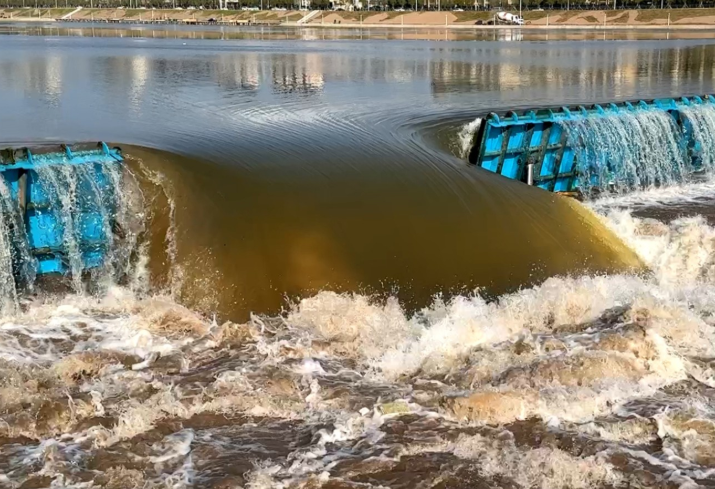
The Jawa water-management system in present-day Jordan is often discussed as one of the earliest known examples of organized dam and reservoir construction. It was developed in an arid region where capturing limited seasonal runoff was essential for supporting human settlement.
The system demonstrated an important principle that still guides modern dam engineering: a dam must be planned as part of a wider network of channels, catchment areas, reservoirs, and water-distribution structures.
Rather than simply blocking a stream, early engineers created an integrated system for collecting and directing water.
Sadd el-Kafara, constructed south of present-day Cairo around 2700–2600 BCE, is widely regarded as one of the oldest known large dams. Its remains indicate an embankment structure approximately 14 meters high and more than 100 meters long.
It appears to have been built to control violent floods moving through Wadi Garawi. However, the dam was damaged or destroyed before it could provide long-term service, possibly because it lacked sufficient protection against overtopping.
Its failure illustrates a lesson that remains central to dam safety: controlling water passing over, through, and around a dam can be as important as building the dam body itself.
Modern spillways, diversion tunnels, drainage systems, and outlet works are direct responses to this fundamental engineering challenge.
Ancient Chinese water projects also demonstrated advanced understanding of flood control and irrigation.
The Dujiangyan irrigation system, begun in the third century BCE, controlled water from the Minjiang River and distributed it across the Chengdu Plain. Unlike a conventional dam that completely blocked a river, Dujiangyan used channels, levees, and water-diversion structures to regulate flows while allowing water and sediment to continue moving through the system. It remains operational today.
This approach offers an early example of working with natural river processes rather than attempting to stop them entirely.
Roman engineers expanded the scale and technical complexity of water infrastructure. Their knowledge of arches, hydraulic mortar, masonry, roads, aqueducts, and foundations enabled them to construct more durable dams and reservoirs.
Romans built gravity dams, embankment dams, and early arch dams. Their use of strong mortars and cements made it possible to create stone masonry structures capable of retaining larger quantities of water.
Some Roman dams supplied cities and military settlements, while others supported irrigation, mining, public baths, and agricultural production.
These projects helped establish several principles that influenced later dam construction:
· Selecting stable foundation conditions
· Using curved structures to transfer water pressure
· Constructing durable masonry faces
· Integrating dams with aqueducts and canals
· Providing controlled outlets for water distribution
After the decline of the Roman Empire, dam construction continued in Europe, Asia, Africa, and the Middle East, although development varied by region.
Many medieval dams were built to power waterwheels. Stored or diverted water drove mills used for grinding grain, cutting timber, processing textiles, crushing ore, and supporting early manufacturing.
In agricultural areas, dams continued to supply irrigation channels and livestock. In growing towns, reservoirs became increasingly important for domestic water storage.
During this period, dam construction was still heavily dependent on experience. Builders learned by observing local rivers, repairing older structures, and adapting designs that had worked elsewhere.
Scientific analysis of water pressure, soil behavior, and structural forces had not yet fully developed. As a result, dam reliability depended greatly on workmanship, local knowledge, and maintenance.
The Industrial Revolution transformed dam engineering.
Growing cities required larger and more dependable water supplies. Expanding factories needed mechanical power and process water. Mining operations needed drainage and water-management systems. Agricultural regions sought more extensive irrigation networks.
At the same time, engineers gained access to improved surveying equipment, stronger construction machinery, Portland cement, mass-produced steel, and more advanced mathematical methods.
These developments enabled the construction of taller and more complex structures.
Concrete allowed engineers to build large gravity and arch dams with greater consistency than traditional stone masonry.
A gravity dam resists water pressure primarily through its own weight. An arch dam transfers much of the water load into the rock walls on either side of a narrow valley. Buttress dams use a sloping water-retaining surface supported by a series of structural buttresses.
Lower Crystal Springs Dam, completed in California during the nineteenth century, became an important early mass-concrete dam. Its construction methods influenced later major concrete projects, including Hoover and Grand Coulee dams.
Water had powered mechanical equipment for centuries, but the development of electrical generators and turbines created a new function for dams: large-scale electricity production.
Hydropower plants convert the energy of falling or flowing water into electricity. Water released from a reservoir passes through turbines, causing them to rotate and drive generators.
This capability transformed dams from primarily water-management structures into major components of national energy systems.
The twentieth century became the great era of large dam construction
.
Governments viewed dams as powerful tools for economic development. Major projects promised irrigation water, electricity, flood protection, navigation, industrial growth, employment, and regional modernization.
Thousands of large dams were constructed across North America, Europe, Asia, Africa, South America, and the Middle East.
The International Commission on Large Dams reports more than 62,000 large dams in its World Register, using criteria based on dam height, reservoir capacity, and structural characteristics.
Completed in the 1930s on the Colorado River, Hoover Dam became one of the defining engineering achievements of the twentieth century.
The project was developed to control floods, store water for cities and agriculture, and generate electricity. Its construction required extensive excavation, river diversion tunnels, large-scale concrete production, cooling systems, and unprecedented project coordination.
For a decade, from 1939 to 1949, the Hoover Powerplant was the largest hydroelectric installation in the world. The facility continues to generate electricity for consumers in Nevada, Arizona, and California.
Hoover Dam became more than a piece of infrastructure. It represented the belief that large engineering projects could reshape landscapes and support the development of entire regions.
Modern dams are rarely limited to a single function. Many are designed and operated as multipurpose water-management systems.
Reservoirs store water for homes, commercial buildings, public services, and industrial facilities. Storage is especially important where rainfall varies significantly between seasons.
A dam can capture water during wet periods and release it gradually during droughts or periods of high demand.
Agriculture remains one of the most important reasons for constructing dams. Reservoirs provide controlled water supplies that allow farmers to irrigate crops when natural rainfall is insufficient.
Reliable irrigation can improve crop yields, support multiple growing seasons, and reduce dependence on unpredictable weather.
Flood-control dams temporarily store excessive runoff and release it at a controlled rate. This can reduce downstream flood peaks and protect communities, infrastructure, and farmland.
However, flood-control effectiveness depends on reservoir capacity, weather forecasting, operating rules, and the condition of spillways and outlet structures.
Hydropower produces electricity without burning fossil fuels at the point of generation. Hydroelectric plants can also change their output relatively quickly, helping grid operators respond to variations in electricity demand.
The International Energy Agency emphasizes that hydropower provides not only low-carbon electricity but also valuable grid flexibility and storage capabilities.
Dams and locks can maintain water depths that allow ships and barges to travel along rivers. Improved navigation supports the movement of agricultural products, fuels, minerals, and industrial goods.
Reservoirs often support boating, fishing, swimming, camping, and tourism. These activities can create economic opportunities for surrounding communities, although recreational use must be balanced with water-supply, safety, and environmental priorities.
Dam designs are selected according to valley shape, geology, available materials, water volume, seismic conditions, construction cost, and project purpose.
Gravity dams use their own weight to resist the horizontal pressure of stored water. They are commonly constructed from concrete or masonry and require strong foundations.
Arch dams curve upstream toward the reservoir. The curved structure transfers water pressure into the rock abutments on both sides of the valley.
They are particularly suitable for narrow, steep-sided valleys with strong rock walls.
Embankment dams are constructed from compacted earth or rockfill. They are the most common general category of large dam and can be adapted to a wider range of foundation conditions than many concrete designs.
An impermeable core, membrane, or facing limits water seepage through the structure.
Buttress dams consist of a water-retaining face supported by a series of triangular or vertical supports. They use less concrete than solid gravity dams but have more complex structural components.
Diversion dams raise the water level enough to direct part of a river into a canal, pipeline, or irrigation system. They may create only a small reservoir.
Run-of-river projects generate electricity using the natural flow and elevation difference of a river. Some include limited storage, while others operate with minimal reservoir capacity.
They may have a smaller flooded area than large storage dams, although their environmental effects still depend on site conditions and operating methods.
Dams can provide major economic and social benefits, but these benefits do not come without costs.
Large reservoirs may flood forests, farmland, settlements, archaeological sites, and wildlife habitats. Communities may be displaced, while downstream users can experience changes in water availability and river conditions.
Dams also alter natural flow patterns. They may block fish migration, trap sediment, change water temperature, and affect downstream wetlands and coastal areas.
Sediment is especially important because it shapes river channels and aquatic habitats. When dams trap sediment in reservoirs, downstream sections may receive less of the material needed to maintain riverbanks, floodplains, deltas, and habitat.
The Elwha River dams in the United States, for example, blocked fish movement and trapped sediment for nearly a century before being removed as part of a major river-restoration project.
Hydropower also requires careful environmental evaluation. Its lifecycle greenhouse gas emissions are generally much lower than those of fossil-fuel electricity, but emissions vary by reservoir. Some reservoirs, particularly in warm regions with large amounts of flooded vegetation, can release carbon dioxide and methane as organic matter decomposes.
The modern question is therefore not simply whether dams are good or bad. The more useful questions are:
· Is the project needed?
· Is the selected site appropriate?
· Are the benefits fairly distributed?
· Can environmental damage be reduced?
· Are affected communities properly consulted?
· Can the dam remain safe under future climate conditions?
· Is rehabilitation better than new construction?
· Would another solution provide the same benefits with fewer impacts?
Many major dams built during the twentieth century are now several decades old.
Concrete can crack. Metal gates can corrode. Electrical and mechanical equipment can become outdated. Sediment can reduce reservoir capacity. Drainage systems can clog, and changes in downstream development can increase the consequences of a potential failure.
A dam that was considered acceptable when built may also face conditions different from those used in its original design.
These may include:
· More intense rainfall
· Longer droughts
· Changing snowmelt patterns
· Stronger flood peaks
· Increased seismic knowledge
· Larger downstream populations
· New environmental requirements
· Changing electricity demand
For this reason, future dam investment will increasingly focus on inspection, rehabilitation, instrumentation, emergency planning, and risk-informed management rather than only constructing new facilities.
The World Bank recommends treating dam safety as an integrated risk-management process involving engineering design, monitoring, operation, regulation, emergency preparedness, and protection of downstream communities.
Historical river records have traditionally played a major role in dam design. Engineers examined past rainfall, floods, droughts, and streamflow to estimate future conditions.
Climate change makes this approach more difficult because the future may no longer follow historical patterns.
Some regions may experience heavier rainfall and more extreme floods. Others may face reduced water availability, longer droughts, or changes in seasonal snow and glacier melt.
A reservoir designed for past conditions may therefore be too small to manage future floods or unable to provide its expected water supply during extended drought.
Climate-resilient dam planning may require:
· Updated flood-frequency analysis
· Larger or modified spillways
· Flexible reservoir operating rules
· Improved forecasting systems
· Greater emergency-release capacity
· Stronger slope and erosion protection
· Coordination among multiple reservoirs
· Regular reassessment of climate risks
Recent World Bank guidance emphasizes evaluating how changes in precipitation and extreme flows may affect the structural and operational safety of hydropower and multipurpose dams.
The future of dams will probably not be defined by one universal design. Instead, water infrastructure will become more intelligent, adaptable, environmentally sensitive, and connected to wider energy and river-management systems.
Future dams will use increasingly sophisticated monitoring systems.
Sensors can measure:
· Water pressure inside the dam
· Seepage and drainage flow
· Structural movement
· Concrete cracking
· Gate performance
· Reservoir levels
· Slope stability
· Seismic activity
· Weather and inflow conditions
Monitoring instruments installed in dams, abutments, slopes, and reservoir areas help engineers identify changing conditions before they become emergencies.
The next stage will combine sensor networks with satellite observations, drones, automated inspections, artificial intelligence, and digital models. Operators will be able to compare real-time data with predicted behavior and investigate unusual patterns more quickly.
Pumped-storage hydropower is likely to become increasingly important as electricity systems add more solar and wind power.
These facilities use electricity during periods of low demand or excess generation to pump water from a lower reservoir to an upper reservoir. When electricity is needed, the water is released through turbines.
In effect, the system stores energy using water and elevation.
The IEA describes pumped-storage hydropower as an important source of grid flexibility and expects continued growth as power systems require more storage to balance variable renewable energy.
Some future projects may use abandoned mines, existing reservoirs, industrial sites, or closed-loop systems that are not continuously connected to a natural river.
In many regions, upgrading existing dams may provide greater benefits than building entirely new ones.
Modernization projects can include:
· Replacing turbines with more efficient equipment
· Strengthening embankments
· Improving spillway capacity
· Installing automated gates
· Adding renewable power generation
· Improving fish passage
· Removing accumulated sediment
· Upgrading emergency-warning systems
· Digitizing operating controls
Rehabilitation can extend infrastructure life while avoiding some of the environmental and social impacts associated with creating a new reservoir.
Every reservoir gradually collects sediment. Without effective management, this process reduces storage capacity and may eventually limit water supply, flood control, or hydropower production.
Future projects will increasingly consider sediment from the beginning of the design process.
Possible strategies include:
· Sediment bypass tunnels
· Controlled flushing
· Sluicing during high flows
· Dredging
· Upstream erosion control
· Sediment-routing operations
· Mechanical sediment removal
The goal is to treat sediment as a natural component of the river system rather than simply a material to be trapped indefinitely.
Future dams will be operated with greater attention to downstream ecosystems.
Environmental flow releases can imitate parts of a river’s natural seasonal pattern. Controlled high-flow events may help move sediment, restore habitats, or support fish reproduction.
Fish ladders, elevators, bypass channels, and improved turbine designs may reduce barriers and injuries to aquatic species, although their effectiveness varies by river and species.
In some cases, the most responsible solution may be to remove a dam that no longer provides sufficient benefits or cannot be operated safely and sustainably.
The future may include fewer highly disruptive megaprojects and more combinations of smaller water-storage, irrigation, flood-management, and energy facilities.
Distributed systems can include:
· Small hydropower stations
· Off-stream reservoirs
· Rainwater-harvesting dams
· Underground storage
· Managed aquifer recharge
· Floodplain restoration
· Natural and constructed wetlands
· Local irrigation reservoirs
These options cannot replace large dams in every situation, but they may reduce the need to depend on a single enormous structure.
Water dams have evolved alongside human civilization.
Ancient communities built earth and stone barriers to capture rainfall and irrigate crops. Roman engineers introduced advanced masonry and arch structures. Industrial development brought concrete, steel, turbines, and scientific design. The twentieth century produced enormous multipurpose dams that transformed regional water and energy systems.
The twenty-first century is introducing a different priority: balance.
Future dams must balance water storage with river health, renewable electricity with ecosystem protection, flood control with climate uncertainty, and infrastructure development with the rights and needs of affected communities.
Some existing dams will be strengthened and modernized. Some will gain smart sensors and more efficient turbines. Some will support pumped energy storage. Others will be reoperated to restore environmental flows, and obsolete structures may be removed.
The history of dams shows that water engineering has never stopped evolving. The next generation of dams will be judged not only by how effectively they hold back water, but by how intelligently, safely, and sustainably they manage it.