News
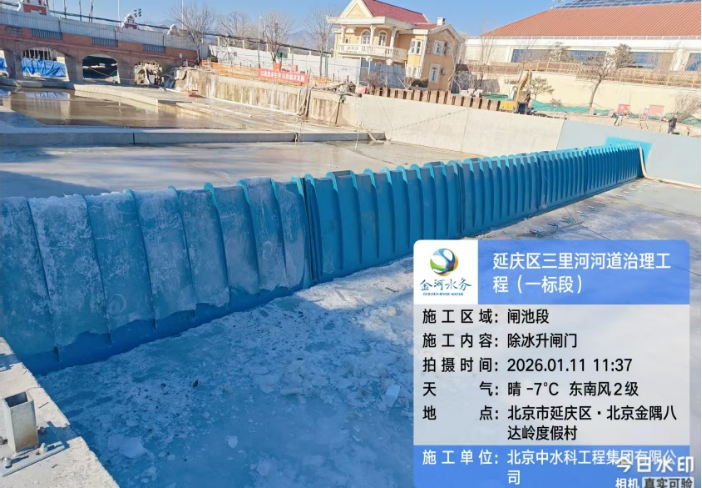
Recently, the renovation project of the Beijing Sanli River Hydraulic Elevator Dam (HED), undertaken by BIC Construction, has been officially completed. This project successfully upgraded the original rubber dam to a modern hydraulic elevator dam, marking a new stage in regional river management and water-ecological landscape construction, and adding another dynamic highlight to the capital’s urban water system.
The project is located along the scenic Sanli River, where the original rubber dam had been in operation for many years. The newly constructed hydraulic elevator dam has a clear river width of 36 meters, a dam height of 2 meters, and consists of 6 spans, each measuring 6 meters in length, featuring an ingenious and sturdy structure. Its core advantage lies in the adoption of an advanced hydraulic drive system, which allows for flexible, precise, and rapid adjustment of the dam height according to different hydrological conditions such as flood and dry seasons. This significantly enhances the river’s flood control safety and water resource regulation capabilities.
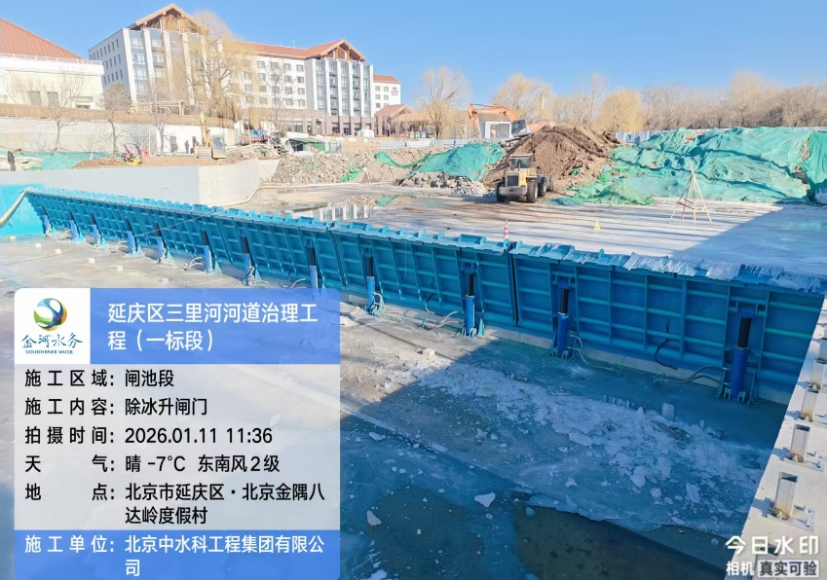
In addition to its outstanding hydraulic functions, the project deeply integrates landscape aesthetics into its design. Modern lighting facilities have been carefully installed on the dam crest, and through an intelligent control system, various lighting modes can be achieved. When night falls and the lights are turned on, water cascades down from the dam crest, interweaving with the changing lights to create a unique nighttime spectacle of “light and waterfall blending into colorful splendor.” What was once a purely functional hydraulic structure has now been transformed into a captivating urban scenic attraction.
The project manager stated that the Sanli River Hydraulic elevator dam project is a successful practice of the philosophy of “ecological water management and harmonious coexistence between humans and water.” It not only addresses the aging issues of the original facilities and ensures river functionality but also, through the combination of technology and art, seamlessly integrates the hydraulic engineering into the urban public space. It provides citizens with new opportunities for waterfront activities and sightseeing, significantly enhancing the regional environmental quality and the city’s charm.
The completion and operation of this project are expected to effectively improve the ecological environment along the Sanli River, optimize water resource allocation, and, with its unique nighttime landscape, become a new landmark for leisurely strolls and photography among residents. It will further highlight Beijing’s distinctive charm as a world-class, harmonious, and livable city.