News
Access to freshwater can be difficult on islands, in coastal communities, at remote industrial sites, and in areas with limited municipal infrastructure. Although seawater may be readily available, its high salt content makes it unsuitable for drinking, irrigation, and most industrial processes without treatment.
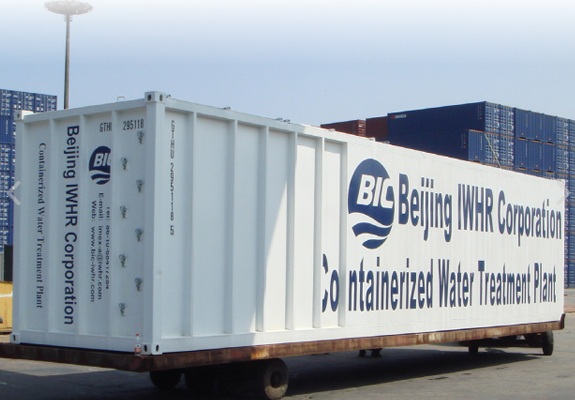
A containerized desalination system provides a compact solution by integrating the main water treatment equipment inside a standard shipping container. Once connected to a seawater intake, power supply, freshwater tank, and brine discharge line, the system can begin converting seawater or brackish water into usable freshwater.
Most containerized desalination plants rely on reverse osmosis, a membrane separation process that removes dissolved salts and other impurities from water.
A containerized desalination system is essentially a complete desalination plant installed inside a modified 20-foot or 40-foot shipping container. The pumps, filters, reverse osmosis membranes, dosing equipment, instruments, and control system are assembled within the enclosure before the unit is transported to the project site.
Because much of the assembly and testing is completed in a controlled factory environment, the amount of installation work required on-site can be significantly reduced. The container also protects the equipment against wind, rain, dust, and direct sunlight.
Despite its compact design, the system follows the same fundamental treatment stages used in larger reverse osmosis desalination plants: seawater intake, pretreatment, high-pressure pumping, membrane separation, post-treatment, and freshwater storage.
The process begins with the collection of seawater or brackish water. Depending on the location, the feedwater may come from an open seawater intake, beach well, borehole, storage tank, or existing pipeline.
Before the water enters the container, a coarse screen may be used to remove seaweed, shells, stones, and other large debris. A feed pump then delivers the raw water into the pretreatment section at a stable flow rate.
The quality of the incoming water can change because of tides, storms, seasonal algae growth, or nearby human activity. These variations make pretreatment an important part of reliable desalination.
Seawater contains more than dissolved salt. It may also carry sand, silt, microorganisms, organic matter, and suspended particles. If these contaminants reach the reverse osmosis membranes, they can cause fouling, pressure loss, reduced water production, and more frequent cleaning.
Pretreatment removes these substances before the water reaches the membrane system. A containerized plant may use multimedia filters, sand filters, ultrafiltration membranes, or other filtration technologies depending on the feedwater conditions.
Cartridge filters are commonly installed as the final filtration barrier. They capture smaller particles that remain after the main pretreatment stage.
Chemical dosing may also be included. For example, antiscalant can help control mineral deposits inside the membrane system, while carefully managed disinfection can limit biological growth. The exact pretreatment process depends on whether the plant is treating open seawater, well water, or brackish groundwater.
After pretreatment, the water enters a high-pressure pump. This pump provides the pressure needed to overcome the natural osmotic pressure of saline water.
In natural osmosis, water moves through a semi-permeable membrane from a lower salt concentration toward a higher salt concentration. Reverse osmosis changes the direction of this movement. By applying sufficient pressure to the saline feedwater, the system forces water molecules through the membrane while most dissolved salts remain behind.
Seawater reverse osmosis systems commonly operate at pressures of approximately 55 to 70 bar, although the actual operating pressure varies with salinity, temperature, membrane type, and system design.
Brackish water contains less salt than seawater and generally requires less pressure for treatment.
The pressurized water then enters pressure vessels containing spiral-wound reverse osmosis membrane elements. These membranes have a selective barrier that allows water molecules to pass through while rejecting most dissolved salts and many other contaminants.
The membrane separation stage creates two water streams.
The first is permeate, which is the low-salinity water that passes through the membrane. This water continues to the post-treatment stage.
The second is concentrate, also known as brine. It contains the rejected salts and other substances removed from the feedwater. The concentrate leaves the system through a separate discharge line.
Not all incoming seawater becomes freshwater. A portion must remain as concentrate to carry the separated salts away from the membrane surface. The relationship between feedwater, permeate, and concentrate is controlled to maintain stable operation and reduce the risk of scaling.
Producing the high pressure needed for seawater reverse osmosis requires considerable energy. However, the concentrate leaving the membrane vessels still contains hydraulic pressure that can be recovered.
An energy recovery device transfers part of this pressure back to the incoming feedwater. This reduces the workload of the high-pressure pump and lowers overall electricity consumption.
In an efficiently designed containerized seawater desalination system, energy consumption may approach approximately 3 kWh for each cubic meter of freshwater produced. Actual energy use depends on feedwater salinity, temperature, recovery rate, equipment efficiency, and operating conditions.
Reverse osmosis removes most of the dissolved salts from seawater, but the resulting permeate may have low mineral content and a slightly acidic pH. Additional treatment is often required before the water can be stored, distributed, or consumed.
Remineralization can add calcium and other minerals back into the water. This improves taste, stabilizes the pH, and reduces the risk of corrosion in storage tanks and distribution pipes.
The water may also pass through ultraviolet disinfection or receive controlled chlorine dosing to manage remaining microorganisms. When the water is intended for drinking, the post-treatment process must be designed to meet the applicable potable-water standards.
For industrial applications, the final treatment may be adjusted according to the process requirements. Some facilities need mineral-balanced utility water, while others may require water with extremely low conductivity.
Although several treatment stages take place inside the container, the system can operate through a centralized automated control panel.
Sensors continuously monitor pressure, flow, conductivity, water level, and equipment status. Product-water conductivity is particularly important because it indicates whether the reverse osmosis membranes are removing salts effectively.
If the system detects abnormal pressure, insufficient feedwater, poor product-water quality, or another operating problem, it can generate an alarm or shut down automatically to protect the equipment.
Many modern systems also support remote monitoring. Operators can review operating data, identify performance changes, and receive maintenance alerts without being permanently stationed beside the plant.
The salt rejected by the membranes does not disappear. It leaves the system in the concentrate stream, so brine management is an essential part of the desalination process.
At coastal sites, the concentrate may be returned to the sea through a properly designed outfall and diffuser. The diffuser helps the brine mix with surrounding seawater and prevents excessive salinity from accumulating in one location.
Other projects may dilute the concentrate with a compatible water stream, use evaporation ponds, or install further concentration and recovery equipment. The appropriate method depends on the site, plant capacity, local environmental conditions, and discharge regulations.
The container does more than make the system transportable. It creates a controlled equipment space where the treatment stages can be arranged, connected, and tested before delivery.
This design reduces the need to construct a separate treatment building. It also allows the plant to be moved by standard transportation methods and deployed in locations where permanent construction would be difficult.
Additional containers can be installed when water demand increases, making the system modular. One container may contain the pretreatment and reverse osmosis equipment, while another may hold chemical dosing, storage, or power equipment in larger installations.
However, “containerized” does not mean that no site work is required. The plant still needs a suitable foundation, raw-water intake, power connection, freshwater storage, drainage, ventilation, and a compliant brine discharge system.
A containerized desalination system transforms seawater into freshwater through a continuous sequence of filtration, pressurization, reverse osmosis, and post-treatment.
Raw water first passes through pretreatment filters that protect the membranes. A high-pressure pump then forces the filtered water through semi-permeable RO membranes, producing low-salinity permeate and concentrated brine. Energy recovery equipment reduces power consumption, while post-treatment adjusts the quality of the freshwater before storage or distribution.
By placing these processes inside a transportable enclosure, containerized desalination makes proven reverse osmosis technology easier to deploy in coastal communities, remote facilities, industrial sites, islands, and emergency water supply projects.