News
Various designs exist. Tidal floodgates usually consist of an aperture within the existing floodgate, with a smaller secondary gate attached. A floating arm controls the opening of the gate, allowing water exchange during each tide. The gate opens at low tide and closes as the tide rises.
Water level control
Water level control is very good, as the float arm can be adjusted to stop inflow at a predetermined water level.
Advantages
Automatic operation driven by tidal movement. Very good water level control. The volume of exchange and the maximum internal water level affected by the tide can be adjusted. The design is flood secure and closes automatically as external water levels rise.
Disadvantages
There is a minor risk of the gate becoming jammed open, as with conventional gates. In some cases, a new gate may need to be manufactured.
Sluice gates consist of an aperture within an existing floodgate, fitted with a sliding plate cover that can be opened to varying degrees. The opening mechanism may be vertical, horizontal, or rotational.
Water level control
Water level control is good, as the aperture size can be adjusted to regulate inflow according to site conditions. The position of the aperture within the floodgate also affects water level control.
Advantages
The variable aperture size provides good water level control. The simple design results in low cost and low maintenance requirements.
Disadvantages
Manual operation is required, and the gate must be closed manually during flood events.
Various designs exist, including:
a) a winch and cable mechanism that allows the existing floodgate to be lifted open, either horizontally or vertically; and
b) a worm-drive mechanism that opens the gates vertically.
Water level control
Water level control depends on the design. Horizontal winch gates provide limited water level control and are typically either fully open or fully closed. Vertical lift gates offer good water level control and can be set at any position from fully closed to fully open.
Advantages
Winch gates allow large and rapid inflows of river water and can be fully raised to assist with outflow following a flood event.
Disadvantages
These gates require intensive manual operation and manual closure during flood conditions. Horizontal winch gates present a higher risk of overtopping when open. Large forces can be involved in winch and cable systems. Vertical winch gates may experience closing difficulties due to friction.
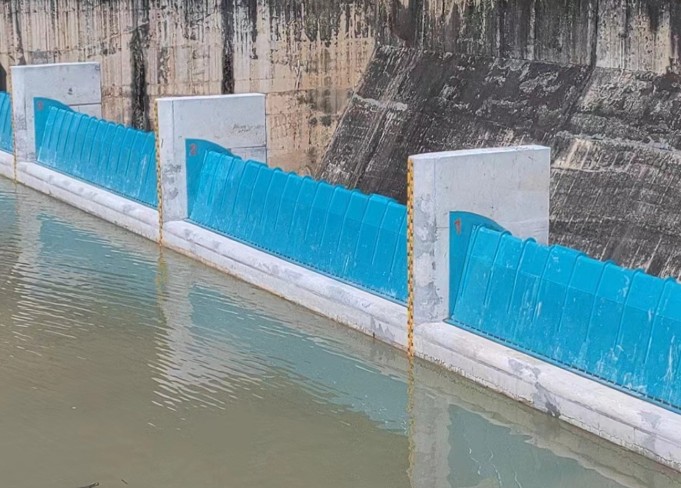
Weirs and fixed sills consist of a partial obstruction placed within a drain. A range of designs is available, and a variety of materials may be used, including sandbags, rock or fill, concrete, and steel.
Advantages
Weirs and sills provide the ability to retain a guaranteed minimum water level. Depending on the design, the retained water depth can be varied, for example to retain only groundwater or shallow surface water. These structures are generally low cost and require minimal maintenance, subject to the materials used.
Disadvantages
Once installed, it may be difficult to adjust the minimum water level, depending on the design. Removal from the drain can also be difficult, again depending on the design and materials used.
Penstocks are sluice gates or vertical lift gates installed on the landward side of a culvert.
Advantages
Penstocks provide a good seal and effective water level control, and failures are rare. When constructed from stainless steel, they require low maintenance.
Disadvantages
Penstocks can be relatively expensive. They require manual operation and, in vertical winch-type designs, may become jammed open during outflow periods. This issue can be avoided by using a screw-thread design.
This simple design consists of boards placed in slots in front of a culvert on the landward side.
Advantages
Water level depth can be adjusted to the desired level. The system is low cost.
Disadvantages
Operation is manual, and the boards can be difficult to remove when a significant head of water is present. The system is suitable only for low-volume drains. Some leakage between boards is common.
The selection of an appropriate floodgate opening device or retention structure depends on the characteristics of the drainage system and the management objectives. All stakeholders involved in the system should be consulted before any works are undertaken.
Retention structures can restrict fish movement upstream and should therefore be used only where there is a clear and significant benefit, such as reducing the discharge of acidic water into the river.
It is important that any works are compatible with the drainage system characteristics; therefore, a thorough site assessment is essential.