News
From Flood Control to Flow Management: Understanding Water Control Structures
Water control structures are essential components of modern water infrastructure. They regulate water levels, manage discharge, redirect river flows, and control the movement of water through dams, reservoirs, canals, and hydropower facilities. Their design directly influences hydraulic performance, structural stability, flood management, and the long-term reliability of water infrastructure.
As water infrastructure continues to age and hydropower development expands, the demand for adaptable and durable water control structures is increasing. Traditional construction methods can involve extensive on-site concrete work, long construction schedules, and complex coordination. Modular precast concrete technology offers an alternative approach, allowing major structural components to be manufactured off-site and assembled at the project location.
Understanding the different types of water control structures, their engineering functions, and the construction methods available is essential to developing reliable water management infrastructure.
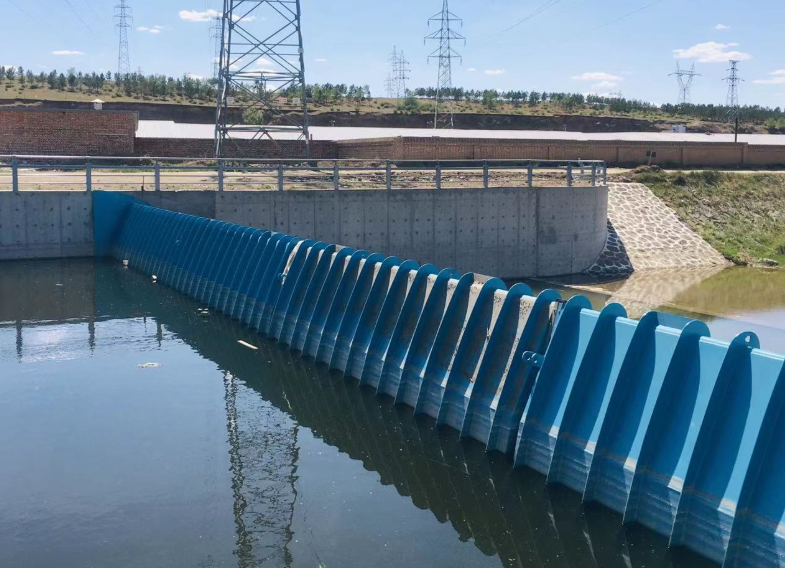
Water control structures are engineered civil structures and associated operating components designed to control the storage, movement, and release of water. They are used in rivers, dams, reservoirs, irrigation networks, and hydroelectric facilities.
Rather than functioning as isolated installations, these structures often operate together as an integrated water management system.
Their primary functions include:
· Water Level Regulation: Maintaining reservoir levels and controlling upstream and downstream water elevations according to operational requirements.
· Flow Regulation: Managing the volume and timing of water released through channels, outlets, and other hydraulic passages.
· Flood Management: Providing controlled discharge routes for excess water and helping reduce the risk of uncontrolled overtopping.
· Water Diversion: Directing river flows toward hydropower facilities, canals, or other designated water conveyance systems.
· Energy Management: Controlling high-velocity discharge and dissipating hydraulic energy to reduce downstream erosion.
· Environmental Protection: Supporting managed environmental flows and the integration of aquatic passage facilities into water infrastructure.
The appropriate configuration depends on the hydraulic conditions, structural requirements, site geology, and intended function of the overall project.
Different water infrastructure projects require different structural arrangements. The following are some of the principal types used in dam construction, hydropower development, and water management systems.
Dams retain water to create reservoirs or regulate river levels. Depending on their design and application, they may support water storage, flood management, irrigation, or hydroelectric power generation.
In hydropower projects, dams and impoundment structures establish the hydraulic conditions needed to direct water toward power generation facilities. Their structural configuration must account for water pressure, foundation conditions, seepage, stability, and the required operating water levels.
Conventional concrete dams typically involve substantial on-site construction. Modular precast concrete technology provides another construction approach by manufacturing structural segments in advance and assembling them at the project site.
Spillways provide a controlled route for excess water to pass from a reservoir or impoundment to the downstream channel.
They are particularly important during periods of high inflow, when reservoir water levels approach the operating limits of the structure.
Common spillway configurations include:
· Overflow Spillways: Allow water to pass over a designated crest when the reservoir reaches a specified elevation.
· Chute Spillways: Convey water down a sloping channel toward a downstream discharge area.
· Gated Spillways: Use movable gates to regulate discharge and control reservoir levels.
· Auxiliary Spillways: Provide additional discharge capacity under designated high-flow conditions.
Spillway performance depends on discharge capacity, approach flow conditions, crest geometry, downstream channel characteristics, and energy dissipation.
High-velocity water can cause significant erosion and structural damage if its energy is not properly managed. Stilling basins and other energy-dissipation arrangements help reduce flow velocity before water returns to the downstream channel.
Intake structures and outlet works regulate how water enters and leaves dams, reservoirs, and hydropower facilities.
An intake structure directs water into a designated conduit or water passage. In a hydroelectric facility, this water may subsequently travel through a penstock or other conveyance system toward the turbine.
Outlet works provide controlled release routes from reservoirs and dams. Their configurations may include several interconnected components:
· Intake towers or entrance structures.
· Conduits and outlet tunnels.
· Trash racks and debris protection systems.
· Operating gates and regulating valves.
· Downstream discharge and energy-dissipation structures.
Gates and valves provide mechanical flow regulation, while the surrounding civil structures provide the necessary structural support and water passages.
The coordination of these components is important for maintaining reliable discharge, facilitating inspection, and supporting different operating conditions.
Diversion structures redirect river water from its natural course toward another channel, reservoir, or hydropower facility.
They are frequently used in run-of-river hydropower projects, where the arrangement of diversion structures and water conveyance facilities determines how river flows are directed toward the power generation system.
Common elements include diversion dams, diversion weirs, channels, tunnels, and associated hydraulic structures.
Their design must consider river flow characteristics, sediment movement, foundation conditions, channel geometry, and the environmental effects of altering natural flow paths.
For hydropower developments, diversion structures must also work in coordination with intake arrangements, powerhouse locations, and downstream water return routes.
Water control infrastructure also extends beyond dams and conventional hydropower facilities.
Coastal and harbor projects require structures that manage water interaction with shorelines and protect surrounding infrastructure. Precast concrete seawalls, retaining structures, and other protective civil works can help address these requirements.
Reservoir and pumped storage projects similarly require structural systems capable of retaining and managing large volumes of water under project-specific hydraulic and geotechnical conditions.
These applications demonstrate why water control structures should be considered as part of a broader civil infrastructure system rather than as individual flow-control devices.
The performance of a water control structure depends on the interaction between hydraulic conditions, structural design, foundation characteristics, and construction methods.
Hydrological studies establish the expected water inflows, seasonal variations, and relevant flood conditions. Hydraulic analysis then evaluates how water moves through and around the proposed structures.
Important considerations include design discharge, operating water levels, hydraulic head, flow velocity, pressure distribution, and downstream energy dissipation.
For hydropower projects, these factors also influence the relationship between water conveyance arrangements and power generation requirements.
Water-retaining structures are exposed to continuous hydraulic loading and environmental forces.
Structural engineering must evaluate water pressure, uplift, seepage, foundation stability, settlement, and other applicable loading conditions.
Geotechnical investigations are equally important because foundation properties and underlying geological conditions influence the structural arrangement and construction approach.
For modular precast concrete systems, the connections between individual modules, anchoring arrangements, and foundation interfaces must be incorporated into the engineering design.
Water infrastructure projects must account for their surrounding river and aquatic environments.
Environmental flow requirements, sediment transport, fish passage, and downstream water conditions may influence the overall arrangement of hydraulic structures.
Operational considerations also affect the design. Access for inspection, maintenance requirements, equipment integration, and the ability to manage different flow conditions all contribute to long-term infrastructure performance.
The construction method influences project scheduling, site activities, equipment requirements, and exposure to changing weather and river conditions.
Traditional cast-in-place construction requires substantial on-site formwork, concrete placement, and curing activities.
Precast construction moves the manufacturing of structural components into a controlled production environment. This allows certain activities to take place before the site is ready for installation, creating opportunities to coordinate off-site manufacturing with foundation preparation and other project work.
Modular precast concrete is an alternative construction approach in which engineered concrete components are manufactured away from the final installation site and subsequently transported and assembled into a complete structure.
This method is particularly relevant to water infrastructure projects where construction time, site access, environmental conditions, and structural complexity create significant challenges.
Precast components are manufactured in a controlled production environment rather than being formed entirely at the project location.
This approach allows manufacturing activities to be organized separately from on-site foundation preparation and other construction operations.
It also provides opportunities for more consistent production procedures, component inspection, and quality control before transportation and installation.
Individual precast modules can be arranged and interconnected to form different structural configurations.
Depending on the project engineering, modular arrangements can accommodate different structural dimensions, layouts, and interfaces with associated civil infrastructure.
This flexibility is particularly relevant when developing water control structures for different river widths, site conditions, and hydropower configurations.
Manufacturing components off-site changes the sequence and distribution of construction activities.
While site preparation and foundation work proceed, precast modules can be produced and prepared for delivery. Once the site is ready, the components can be positioned and assembled according to the engineered installation sequence.
This approach can reduce the amount of conventional concrete construction required at the project location and help limit the impact of weather-related interruptions to on-site casting activities.
However, the actual construction schedule and project benefits depend on site conditions, engineering requirements, transportation, installation planning, and the scope of work.
Water control structures are required in both new infrastructure developments and the modernization of existing facilities.
New hydropower developments require coordinated civil structures for water retention, diversion, intake, discharge, and power generation.
Modular precast construction can be applied to suitable dam and water impoundment configurations, helping organize structural manufacturing and site assembly as part of the overall project sequence.
Aging dams may require structural reinforcement, reconstruction, or modifications to address deteriorating conditions and changing infrastructure requirements.
Conventional reconstruction can involve extensive demolition and on-site concrete construction. In some circumstances, these activities also create environmental concerns, particularly where historical sediments or contaminants are present.
Our approach emphasizes several aspects of infrastructure development:
· Modular Construction: Structural components are manufactured off-site and assembled according to the project configuration.
· Project Adaptability: Modular arrangements can be developed around project-specific structural and site requirements.
· Construction Coordination: Off-site manufacturing can be coordinated with site preparation to improve construction sequencing.
· Infrastructure Rehabilitation: Modular precast technology can be applied to suitable existing dam reconstruction and retrofit projects.
· Engineering Integration: Structural modules must work with foundations, spillways, abutments, conduits, and other project-specific infrastructure.
Water control structures are fundamental to the safe and efficient operation of dams, reservoirs, hydropower facilities, and other water infrastructure. From impoundment structures and spillways to intake systems and diversion facilities, each component contributes to managing water movement and maintaining the required hydraulic conditions.
Their long-term performance depends on appropriate hydraulic analysis, structural stability, foundation conditions, environmental considerations, and construction methods.
As existing water infrastructure requires rehabilitation and new hydropower projects seek more adaptable construction approaches, modular precast concrete technology offers an alternative to conventional on-site construction.