News
Hydraulic lifting dams are becoming increasingly important in modern water resources engineering, flood control systems, irrigation networks, and hydropower infrastructure. As climate change intensifies extreme weather events and urbanization increases pressure on river systems, the demand for efficient, reliable, and controllable water regulation structures continues to grow. Among various hydraulic control structures, hydraulic lifting dams stand out due to their flexibility, operational efficiency, and structural advantages.
A hydraulic lifting dam is a movable water control structure that uses hydraulic cylinders or similar actuating systems to raise or lower gates, regulating water flow and water levels in rivers, reservoirs, canals, and spillways. Unlike fixed dams, these systems allow operators to dynamically adjust discharge capacity based on real-time conditions. This adaptability is one of their greatest strengths, especially in flood-prone or seasonally variable regions.
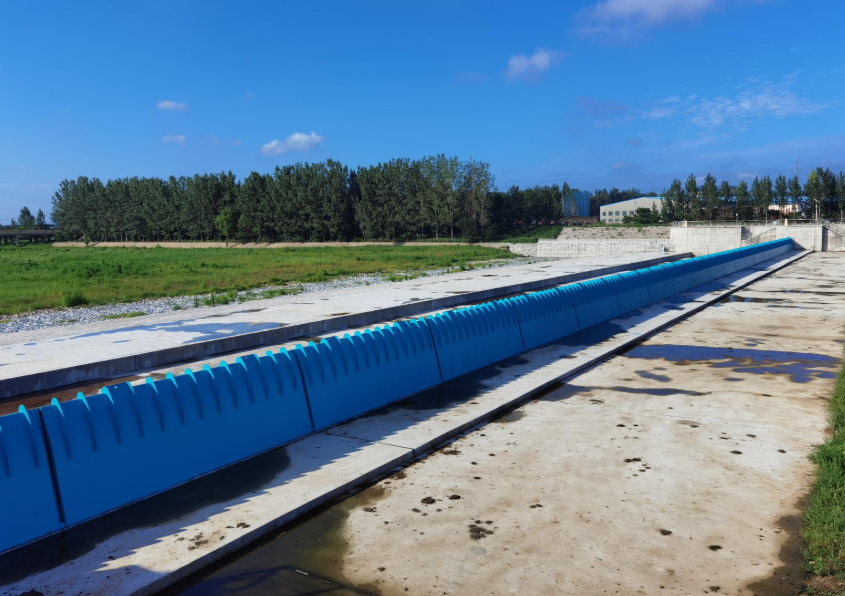
One of the most significant advantages of hydraulic lifting dams is their precise water level control. Traditional fixed dams rely on passive overflow or limited mechanical gates, but hydraulic systems enable operators to finely tune gate positions. This allows better regulation of upstream water levels, ensuring stable reservoir storage while preventing overtopping or downstream flooding. In regions with fluctuating rainfall patterns, this level of control is essential for maintaining both water supply reliability and flood safety.
Another key benefit is their rapid response capability. Hydraulic lifting systems can open or close gates quickly compared to many mechanical or manually operated systems. This fast actuation is crucial during sudden flood events, where every minute matters. By rapidly increasing discharge capacity, hydraulic lifting dams can reduce peak flood waves and protect downstream communities and infrastructure. This responsiveness is one reason they are widely used in modern spillway designs and flood management systems.
Hydraulic lifting dams also offer high operational efficiency with relatively low mechanical effort. The hydraulic mechanism converts fluid pressure into linear motion, allowing large gates to be moved with minimal energy input. Even heavy steel or composite gates can be lifted smoothly because hydraulic cylinders generate substantial force with compact equipment. In many designs, the curved or balanced structure of gates further reduces the lifting load, improving efficiency and reducing wear on mechanical components.
From a structural engineering perspective, hydraulic lifting dams distribute loads more effectively than many traditional gate systems. The hydraulic lifting mechanism allows for controlled, evenly applied force, reducing stress concentrations on critical structural elements. In many modern radial and spillway gate systems, the geometry is designed so that hydrostatic forces are transferred efficiently to support points, minimizing bending stress and improving long-term durability. This makes hydraulic lifting dams suitable for high-head and large-span applications where structural reliability is essential.
Another important advantage is improved flood discharge capacity. Hydraulic lifting dams can be fully opened to allow unobstructed flow, significantly increasing the discharge capability of spillways or channels. Compared to fixed weirs or partially adjustable systems, this full-opening capability provides a safer and more efficient way to pass extreme flood events. In dam safety design, redundancy and high-capacity discharge systems are essential, and hydraulic lifting gates are often selected because of their ability to quickly transition from controlled flow to maximum release conditions.
Hydraulic lifting dams also provide excellent adaptability to different hydraulic conditions. They can be integrated into spillways, canal headworks, diversion structures, and hydropower intakes. Their operation can be automated and linked to monitoring systems, enabling real-time adjustments based on upstream water levels, rainfall data, or downstream flow requirements. This automation capability supports modern smart water management systems, where data-driven control is becoming the standard.
Maintenance and operational safety are additional strengths. Because hydraulic systems are generally simpler in motion mechanics compared to complex gear-driven or chain-driven systems, they often require fewer moving parts exposed to harsh environments. Many designs place critical hydraulic components in protected areas, reducing exposure to debris, sediment, and ice. This improves service life and reduces long-term maintenance costs. In dam environments where reliability is critical, simplicity combined with robustness is a major advantage.
Energy efficiency is another important factor. Hydraulic lifting systems typically require energy only during movement (lifting or lowering), and not to maintain position in many cases. This reduces continuous power consumption compared to some electrically driven mechanical systems. Additionally, modern hydraulic systems can incorporate energy recovery or pressure balancing technologies, further improving efficiency in large installations.
Hydraulic lifting dams also contribute to environmental and operational safety. By enabling controlled water release, they help maintain ecological flow requirements downstream, which is important for fish migration, sediment transport, and river health. Sudden uncontrolled discharges are reduced, making river systems more stable and predictable. In some designs, gates can be partially opened to maintain minimum environmental flows even during dry seasons, balancing human and ecological needs.
Cost-effectiveness over the lifecycle is another advantage. While initial construction and installation may require significant investment, hydraulic lifting dams often provide lower long-term operational costs due to reduced mechanical wear, improved efficiency, and lower maintenance frequency. Their durability and adaptability also reduce the need for frequent structural modifications as environmental or operational requirements change.
In addition, hydraulic lifting dams are highly compatible with modern engineering upgrades. They can be integrated with remote monitoring systems, SCADA control platforms, and automated flood warning systems. This digital integration allows operators to manage large dam systems from centralized control rooms, improving decision-making speed and reducing human risk during extreme events.
Hydraulic lifting dams represent a highly advanced and efficient solution for modern water management challenges. Their ability to combine precise control, rapid response, high discharge capacity, structural efficiency, and automation makes them superior to many traditional water control systems. As global demands for resilient infrastructure continue to increase, hydraulic lifting dams will play an increasingly important role in flood control, hydropower generation, irrigation, and sustainable water resource management.